



What's Happening?
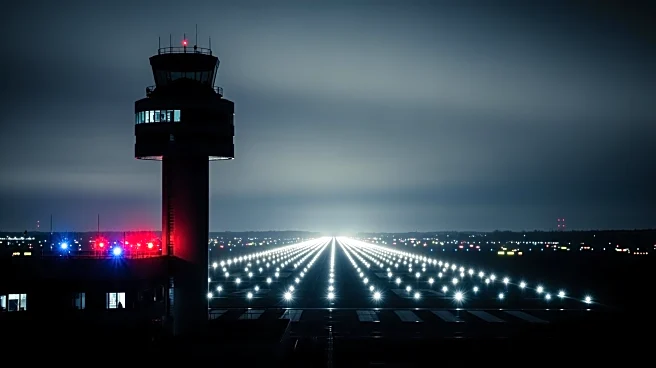
On the morning of March 23, 2026, flights at Newark Liberty International Airport in New Jersey were temporarily halted following the evacuation of the control tower. The Federal Aviation Administration (FAA) reported that the evacuation was prompted
by a burning smell emanating from an elevator within the tower. The incident was first reported around 7:30 a.m. local time. Air traffic controllers vacated the tower as a precautionary measure, leading to a temporary pause in both arrivals and departures. Approximately 30 minutes after the initial report, the controllers returned to their stations, and the ground stop was lifted. The cause of the burning smell remains unknown, and it is unclear if there were any injuries associated with the incident.
Why It's Important?
The temporary halt of flights at a major airport like Newark Liberty International can have significant ripple effects on air travel, potentially causing delays and disruptions across the national air traffic network. Newark is one of the busiest airports in the United States, serving as a critical hub for both domestic and international flights. The incident underscores the importance of safety protocols and quick response measures in maintaining the safety and efficiency of air travel. It also highlights the potential vulnerabilities in airport operations that can arise from unexpected technical issues. The swift resolution of the situation demonstrates the effectiveness of emergency procedures in minimizing disruption and ensuring the safety of passengers and staff.
What's Next?
As the situation develops, further investigations are likely to be conducted to determine the exact cause of the burning smell in the control tower. The FAA and airport authorities may review and possibly enhance safety protocols to prevent similar incidents in the future. Airlines and passengers affected by the temporary halt may seek updates on flight schedules and any potential compensations for delays. The incident may also prompt discussions on the maintenance and safety standards of airport facilities, particularly those involving critical infrastructure like control towers.