

What's Happening?
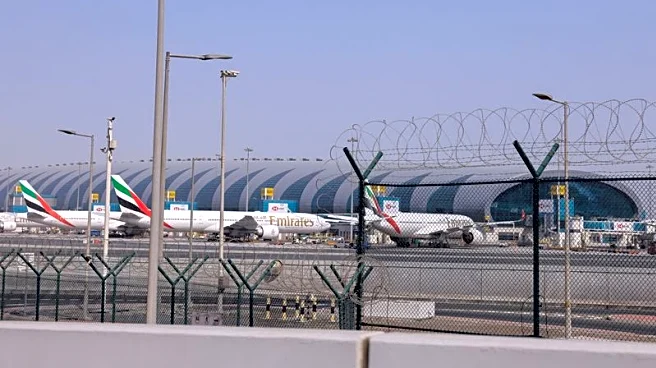
Emirates has resumed a limited number of flights from Dubai following a temporary halt due to recent U.S. and Israeli military actions against Iran. The first flight, EK500, departed for Mumbai, India, marking a cautious step towards normalizing air travel
in the region. This development comes after a significant disruption in air travel, with over 11,000 flights canceled across the Middle East. The Dubai International Airport, a major global hub, was closed for three days, affecting thousands of travelers. While Emirates has begun operations, it is prioritizing customers with earlier bookings and has advised others to await further notifications. Meanwhile, Israeli airline El Al is considering using private jets to repatriate stranded citizens. The situation remains fluid, with airspace over parts of the Middle East still restricted.
Why It's Important?
The resumption of flights by Emirates is a critical step in restoring connectivity in a region that serves as a major transit hub for international travel. The disruptions have had widespread implications, affecting not only passengers traveling to and from the Middle East but also those transiting through the region. The limited reopening of airspace is a tentative sign of stabilization, but the ongoing geopolitical tensions pose a risk to further disruptions. Airlines and travelers alike face uncertainty, with potential economic impacts on tourism and related industries. The situation underscores the vulnerability of global travel networks to geopolitical events, highlighting the need for contingency planning in the aviation sector.
What's Next?
As the situation develops, airlines will continue to monitor the geopolitical climate and adjust their operations accordingly. Travelers are advised to stay informed about flight statuses and potential changes. The broader implications for international relations and regional stability remain uncertain, with potential diplomatic efforts needed to de-escalate tensions. The aviation industry may also push for more robust crisis management strategies to mitigate the impact of similar events in the future.