






What's Happening?
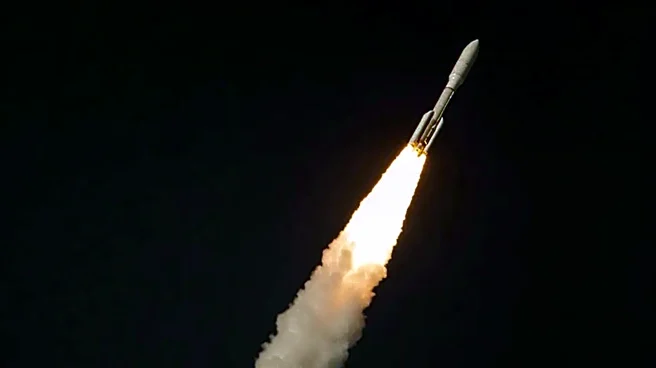
The Louisiana State Rocketry (LSR) team recently achieved a successful launch of their newest rocket, Kaya 2, on October 10. This project involved three LSU students who designed and developed the rocket, with 80% to 90% of its components manufactured
at LSU. Calvin Hatsuyuki, a sophomore mechanical engineering major, was instrumental in designing Kaya 2. Michael Fraser, a sophomore electrical engineering student, created components for detecting GPS data, velocity, and altitude. Brock Landers, a junior mechanical engineering student, was responsible for the rocket's machining. The team utilized their experience from a previous competition rocket to develop the Kaya models, incorporating new manufacturing techniques over approximately two months. Kaya 2 is classified as a class two vehicle, requiring launch at specific national locations. The team traveled to Hearne, Texas, to use the Tripoli Houston Rocket Club’s launch site, carefully planning for weather conditions to ensure a successful recovery and protect their investment.
Why It's Important?
The successful launch of Kaya 2 by the Louisiana State Rocketry team highlights the advanced capabilities and innovative spirit within U.S. university engineering programs. This achievement demonstrates the practical application of theoretical knowledge in mechanical and electrical engineering, fostering hands-on experience crucial for future aerospace and technology sectors. The high percentage of components manufactured at LSU underscores the potential for domestic innovation and self-sufficiency in specialized engineering fields. Such projects are vital for developing a skilled workforce, attracting talent to STEM disciplines, and potentially contributing to national advancements in rocketry and space exploration. The collaboration among students from different engineering disciplines also showcases the importance of interdisciplinary teamwork in complex technical endeavors, preparing them for real-world challenges in industries that drive economic growth and technological progress.
What's Next?
Following the successful launch of Kaya 2, the Louisiana State Rocketry team plans to continue refining their designs and building larger rockets. The next phase involves conducting a test run with the flight computer to compare the obtained data with commercial flight data, aiming for further improvements and validation of their systems. While additional enhancements may necessitate the construction of a new rocket, the team is committed to continuous development and scaling up their projects. This iterative process of design, launch, data analysis, and refinement is fundamental to engineering and will contribute to the students' expertise and the program's overall advancement. The experience gained will be invaluable for the students' academic and professional careers, potentially leading to innovations in the aerospace industry.
Beyond the Headlines
The Louisiana State Rocketry team's accomplishment extends beyond a single successful launch, representing a significant investment in the future of U.S. engineering and scientific leadership. By developing and manufacturing most of the rocket's components in-house, the team is cultivating a deep understanding of complex systems and fostering a culture of innovation and problem-solving. This hands-on approach to learning is critical for addressing future technological challenges and maintaining a competitive edge in global scientific and industrial landscapes. The project also highlights the importance of specialized facilities and clubs, like the Tripoli Houston Rocket Club, in providing essential infrastructure for advanced student projects. Such initiatives not only educate but also inspire the next generation of engineers and scientists, ensuring a pipeline of talent for critical sectors and contributing to the nation's long-term technological resilience.