
What's Happening?
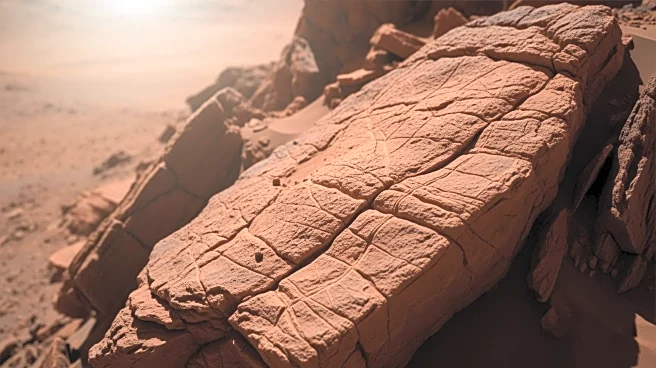
NASA's Perseverance rover has discovered intriguing signs that may indicate past microbial life on Mars. The rover, which has been exploring the Martian surface, identified rocks with 'leopard spots'—tiny
splotches surrounded by dark material. These features resemble fossilized microbes found on Earth. Detailed analyses by researchers, including Joel Hurowitz from Stony Brook University, revealed forms of iron and sulfur in these spots, which are often associated with microbial activity. Despite these promising findings, the future of the Mars Sample Return project, which aims to bring these samples back to Earth for further study, is uncertain. The project faces potential cancellation under the proposed NASA budget for 2026.
Why It's Important?
The discovery of potential biosignatures on Mars is significant as it could provide evidence of past life beyond Earth, reshaping our understanding of the universe. If confirmed, these findings could have profound implications for astrobiology and the search for extraterrestrial life. However, the potential cancellation of the Mars Sample Return project poses a challenge, as analyzing these samples on Earth is crucial for definitive conclusions. The decision could impact future Mars exploration missions and the scientific community's ability to confirm these findings.
What's Next?
The fate of the Mars Sample Return project will depend on budgetary decisions by the U.S. government. If the project is canceled, alternative strategies may need to be developed to continue the search for life on Mars. The scientific community may advocate for the project's continuation, emphasizing its importance for astrobiology. Meanwhile, researchers will continue to analyze data from Perseverance and other Mars missions to gather more evidence of past life.