
What's Happening?
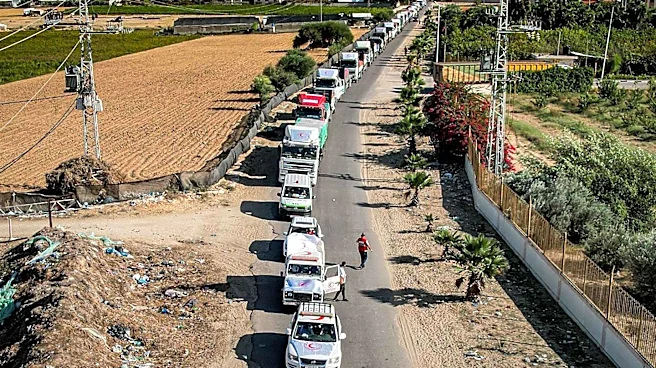
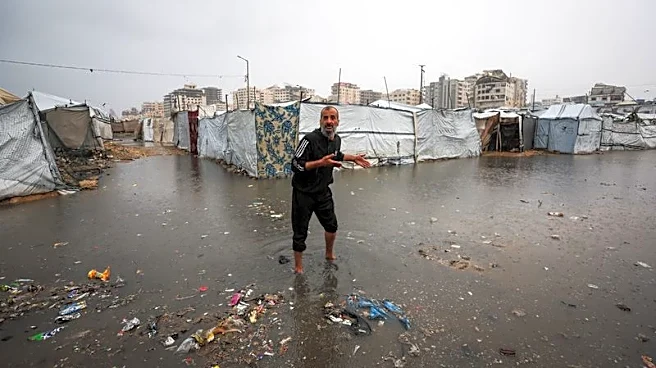
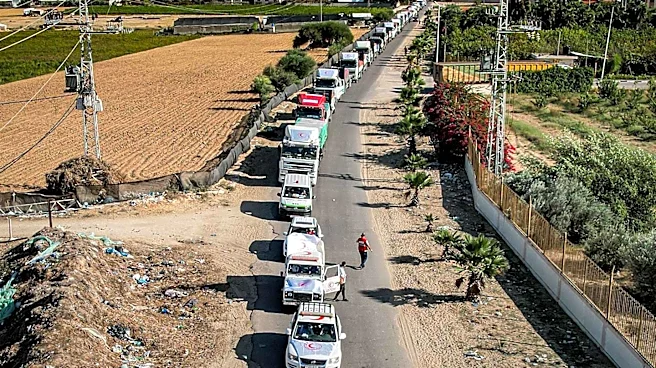
EU Commissioner for Equality, Preparedness and Crisis Management Hadja Lahbib has called for greater access for humanitarian aid to the Gaza Strip. This plea comes as heavy rains have caused widespread
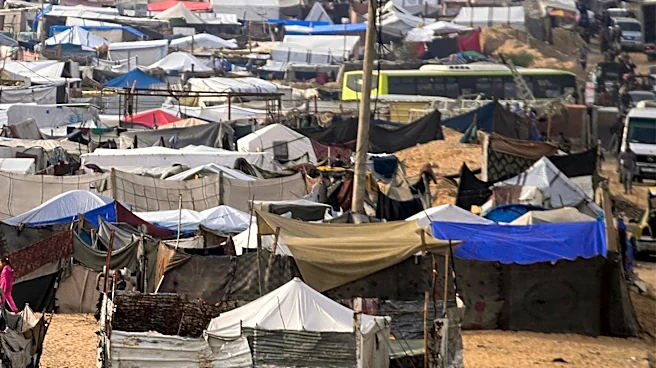
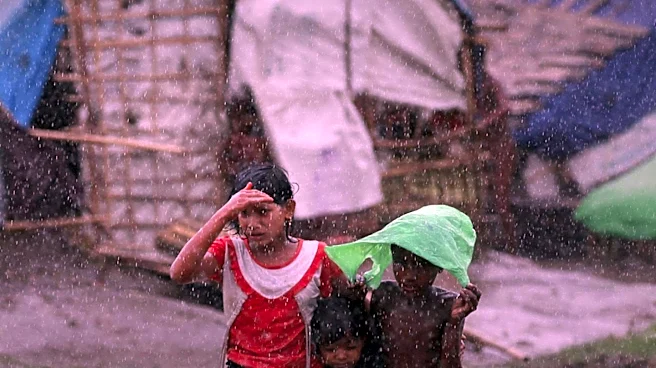
flooding in displacement camps, exacerbating an already severe humanitarian crisis for families. The UN agency for Palestinian refugees, UNRWA, reported that approximately 1.98 million people in Gaza are in urgent need of shelter and other essential supplies, a critical situation as winter approaches. According to Gaza's Government Media Office, storms that began late Friday have inundated around 70,000 tents housing displaced Palestinians. The ongoing relief operations are further complicated by damaged infrastructure and a significant shortage of emergency equipment. Commissioner Lahbib emphasized that humanitarian organizations are continuing their efforts despite the adverse weather but require immediate additional assistance to address the dire conditions.
Why It's Important?
The call for increased humanitarian aid access to Gaza highlights the escalating crisis faced by nearly two million displaced Palestinians. The flooding of tens of thousands of tents not only destroys temporary shelters but also contaminates water sources and spreads disease, posing significant health risks, especially to vulnerable populations like children and the elderly. The damaged infrastructure and lack of emergency equipment severely impede relief efforts, making it difficult to provide basic necessities such as food, clean water, and medical care. This situation underscores the urgent need for international cooperation and pressure to ensure that humanitarian aid can reach those in desperate need without obstruction. The long-term implications include potential outbreaks of illness, increased mortality rates, and further destabilization of the region if immediate and sustained aid is not provided.
What's Next?
Following Commissioner Lahbib's urgent call, the immediate next steps will likely involve intensified diplomatic efforts to secure broader access for humanitarian aid into Gaza. International organizations and donor countries are expected to increase pressure on relevant authorities to facilitate the entry of essential supplies and personnel. Humanitarian agencies on the ground will continue to assess the damage and prioritize aid distribution to the most affected areas, focusing on providing temporary shelter, clean water, and medical assistance. There may also be calls for emergency funding from international bodies to support the massive relief operation required. The onset of winter will further amplify the urgency, necessitating rapid deployment of winterization kits and more robust shelter solutions to prevent further suffering and loss of life.
Beyond the Headlines
The humanitarian crisis in Gaza, exacerbated by recent flooding, points to deeper systemic issues beyond immediate aid needs. The vulnerability of displaced populations in makeshift camps highlights the long-term consequences of conflict and displacement, where basic human rights, including the right to adequate shelter and safety, are severely compromised. The damaged infrastructure not only hinders current relief efforts but also signifies the extensive rebuilding challenges that will persist long after the immediate crisis subsides. This situation also brings to the forefront the ethical responsibilities of all parties involved to ensure the protection of civilians and unimpeded humanitarian access, irrespective of political considerations. The international community's response will be a critical test of its commitment to humanitarian principles and its ability to address complex crises effectively.