






What's Happening?
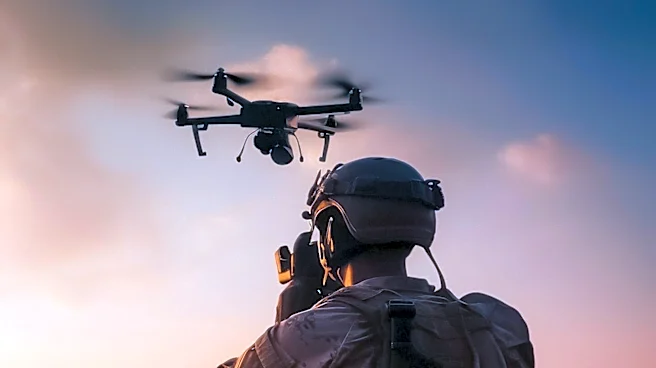
The U.S. Army conducted a live-fire demonstration on November 12, 2026, at Grafenwoehr Training Area in Germany, showcasing coordinated drone strikes, uncrewed ground vehicles (UGVs), and existing missile systems. Organized by the U.S. Army Combat Capabilities
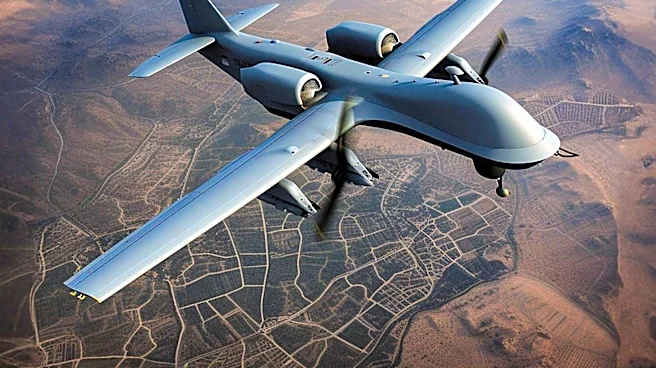
Development Command (DEVCOM) Armaments Center, the exercise aimed to evaluate how uncrewed air and ground systems can extend strike range and reduce soldier exposure to danger. During the demonstration, a TRV-150 drone released smoke over a target, followed by drones launched from a HIV3 swarm-drone launcher fitted to an R3NEGADE UGV conducting an autonomous strike. Additionally, a second R3NEGADE UGV was equipped with a remotely operated weapon station carrying a Javelin missile, and a TRV-400 aircraft with the developmental FIR3FLY anti-armour capability was displayed.
Why It's Important?
This demonstration signifies a crucial step in the U.S. Army's modernization efforts, focusing on scalable, affordable, and lethal options for warfighters. By integrating drone swarms and UGVs, the Army aims to achieve 'decision advantage' by getting the right data to warfighters in real-time, enabling them to out-think and out-pace adversaries. This approach directly addresses the lessons learned from conflicts like Ukraine, where inexpensive drones have proven capable of destroying multi-million-dollar platforms. The ability to deploy unmanned assets from containerized systems, as highlighted by the Remote Rapid Response Autonomous Contingency Team (R3ACT) program, offers more adaptable options and shifts risk away from soldiers, enhancing operational flexibility and safety.
What's Next?
The U.S. Army will continue to refine and integrate these uncrewed systems into its operational frameworks, aligning with its strike and endurance elements. The focus will remain on developing systems that can be fielded at scale, emphasizing cost-effectiveness and lethality. Further testing and development will likely explore advanced autonomous capabilities, improved data integration, and enhanced human-machine teaming. The success of these demonstrations could lead to wider adoption of drone swarms and UGVs across various military branches, transforming future battlefield strategies and reducing the reliance on human personnel in high-risk environments. The emphasis on commercially available technology also suggests potential for rapid innovation and deployment.
Beyond the Headlines
The increasing reliance on autonomous and uncrewed systems in warfare raises significant ethical and strategic questions. The concept of 'shifting risk away from soldiers' is appealing, but it also necessitates careful consideration of accountability, decision-making processes in autonomous systems, and the potential for unintended escalation. The integration of commercially available technology into military applications blurs the lines between civilian and military innovation, potentially accelerating technological advancements but also posing challenges related to supply chain security and control. This shift towards unmanned warfare could fundamentally alter the nature of conflict, demanding new legal frameworks and international norms to govern the use of such technologies.