





What's Happening?
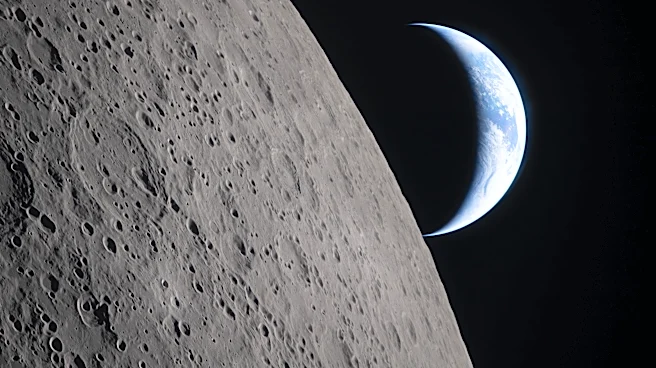
The crew of NASA's Artemis II mission captured a striking image of a crescent Earth setting behind the moon's limb, an event referred to as 'Earthset.' This moment occurred just before the Orion spacecraft passed behind the moon, leading to a 31-minute
communications blackout with Mission Control in Houston, Texas. The image, showing Australia and Oceania in daylight while the rest of Earth fades into night, left the crew deeply emotional. Commander Reid Wiseman described the experience as chilling and unbelievable, noting the visible atmosphere and terrain on the moon projected across Earth. The event draws comparisons to the iconic Earthrise image from the Apollo 8 mission in 1968, which helped spur the modern environmental movement.
Why It's Important?
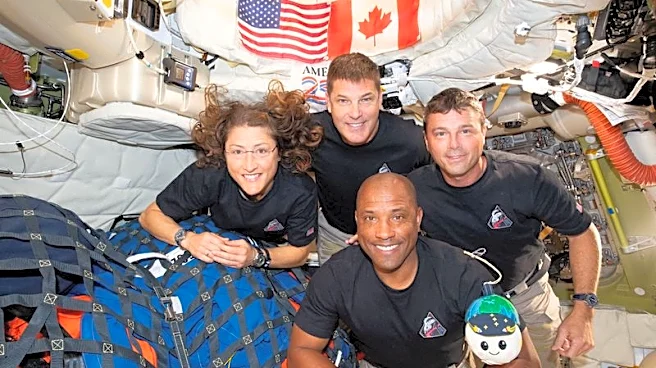
The 'Earthset' image captured by the Artemis II crew is significant as it marks a historic moment in space exploration, being the first mission around the moon since 1972. Such images provide a unique perspective on Earth, highlighting its fragility and finite nature, which can influence environmental awareness and policy. The emotional impact on the crew underscores the profound experience of space travel and the importance of continued exploration. This mission also demonstrates advancements in space technology and international collaboration, with Canadian astronaut Jeremy Hansen participating alongside NASA astronauts.
What's Next?
Following the successful lunar flyby, the Artemis II mission will continue to gather scientific data and test systems for future missions. The insights gained from this mission will inform the upcoming Artemis III mission, which aims to land astronauts on the lunar surface. The emotional and scientific experiences of the Artemis II crew may also inspire further public interest and support for space exploration initiatives. NASA and its international partners will likely continue to collaborate on future missions, expanding human presence in space.
Beyond the Headlines
The Artemis II mission highlights the evolving role of international cooperation in space exploration, with astronauts from different countries working together. This collaboration may pave the way for more inclusive and diverse space missions in the future. Additionally, the emotional experiences of astronauts during such missions can contribute to discussions on the psychological aspects of long-duration space travel, potentially influencing training and support systems for future crews.