






What's Happening?
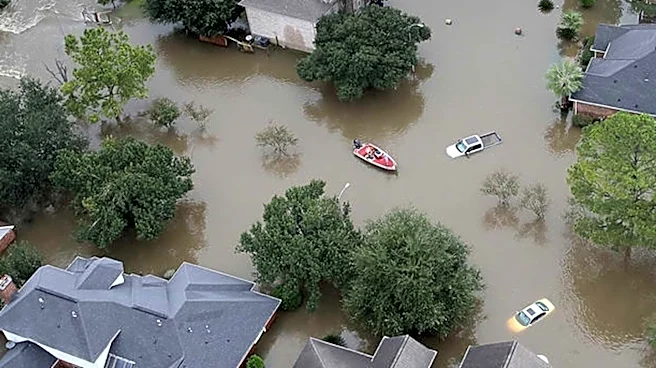
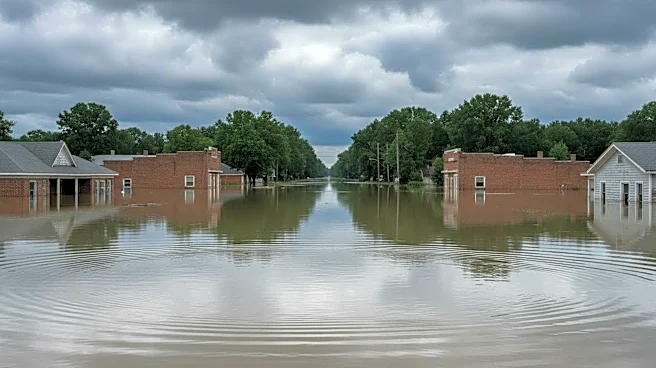
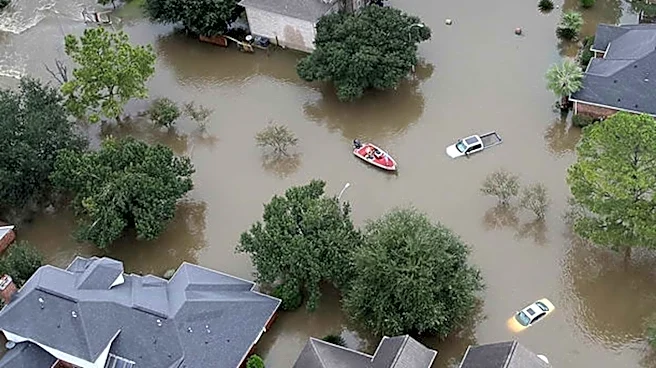
In southeastern Missouri, more than 200 campers and staff were airlifted to safety by the Missouri National Guard after record rainfall caused severe flooding. The deluge, which dropped 6 to 12 inches of rain, isolated Camp Taum Sauk in Reynolds County,
prompting the deployment of eight Black Hawk helicopters to evacuate 202 individuals. Governor Mike Kehoe praised the first responders for their bravery and professionalism in handling the crisis. The flooding, described as a 1-in-1,000-year event, affected several counties, including Crawford, Iron, Madison, Reynolds, and Wayne. Emergency services also rescued individuals trapped in trees and dealt with capsized rescue boats. While no major injuries or fatalities have been reported, a woman remains missing after her house was swept away in Crawford County.
Why It's Important?
The flooding in Missouri underscores the increasing frequency and severity of extreme weather events, which pose significant challenges to emergency response systems and infrastructure. The rapid mobilization of the Missouri National Guard highlights the critical role of state resources in disaster response. The event also raises concerns about the vulnerability of recreational areas and communities in flood-prone regions. The economic impact could be substantial, affecting local tourism and necessitating costly recovery efforts. Additionally, the situation serves as a reminder of the importance of preparedness and the need for robust communication systems to alert residents in vulnerable areas.
What's Next?
As recovery efforts continue, authorities are monitoring weather conditions closely, with additional rain expected. The National Weather Service has issued flash flood warnings, and the Black River is anticipated to reach record levels. Governor Kehoe has urged residents in affected areas to remain vigilant and prepared for further evacuations if necessary. The search for the missing woman in Crawford County is ongoing, with family and friends actively participating. Long-term, the state may need to reassess flood management strategies and infrastructure resilience to better cope with such extreme weather events in the future.