
What's Happening?
Border officials and experts are reflecting on lessons learned from the recent FIFA World Cup, particularly regarding managing high volumes of travelers at U.S. and Canadian borders. Harmit Gill, the U.S. Customs
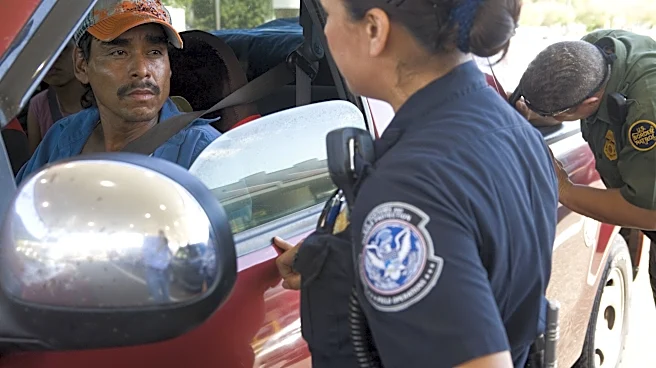
and Border Protection (CBP) port director in Blaine, emphasized the importance of years of preparation, including clear communication of required documents and Trusted Traveler Programs enrollment drives. Despite initial expectations, traveler volumes during the World Cup did not spike as much as anticipated, with a peak in June followed by a drop in July, resulting in no significant change compared to past border crossing data. However, CBP agents processed 37,000 travelers in eight hours during the peak, representing a 13% increase over typical summer days. Key strategies included using historic traffic data to manage lane openings and leveraging technology like the CBP Link app for pre-filling I-94 forms and biometric updates.
Why It's Important?
The insights gained from managing border crossings during the FIFA World Cup are crucial for future large-scale international events and for improving overall border efficiency and security. The experience highlighted the effectiveness of proactive measures, such as accessible websites for document requirements and enrollment blitzes for Trusted Traveler Programs like NEXUS. The successful integration of technology, including the CBP Link app for pre-arrival documentation and biometric verification, demonstrates a path toward streamlining the entry process while maintaining security. These lessons can inform policy decisions and technological investments aimed at reducing wait times and enhancing the traveler experience, which is vital for tourism and cross-border commerce. The Canadian government's earmarking of significant funds for biometric strategy and border technology upgrades in its 2026 budget reflects a similar commitment to modernizing border operations.
What's Next?
Border agencies are likely to continue investing in and expanding the use of technology and pre-arrival programs to manage future high-volume events. Harmit Gill indicated a desire to mandate advance passenger manifests for bus companies, which proved effective during the World Cup, pending regulatory changes. The success of NEXUS enrollment blitzes suggests that continued efforts to promote and streamline such programs could further improve efficiency. Future strategies will likely focus on leveraging data analytics to predict traffic patterns, optimizing staffing and lane management, and exploring further biometric solutions. The ongoing collaboration between U.S. and Canadian customs agencies will be essential in developing harmonized approaches to border management, ensuring both security and efficient travel for international visitors.
Beyond the Headlines
The experience of the FIFA World Cup at the border points to a broader evolution in international travel and border management, moving towards a more data-driven and technologically integrated approach. The emphasis on 'moving traffic efficiently at the same time, not sacrificing security' reflects a delicate balance that border agencies constantly strive to achieve. The observation that traveler volumes didn't spike as much as expected, potentially due to 'frosty relations' between the U.S. and Canada, hints at the geopolitical factors that can influence cross-border movement, even during major cultural events. This suggests that effective border management is not solely about operational efficiency but also about understanding and adapting to broader international relations and public sentiment. The increasing reliance on biometric data and digital pre-clearance also raises questions about data privacy and the future of border interactions, potentially shifting from manual checks to more automated and less personal processes.