







What's Happening?
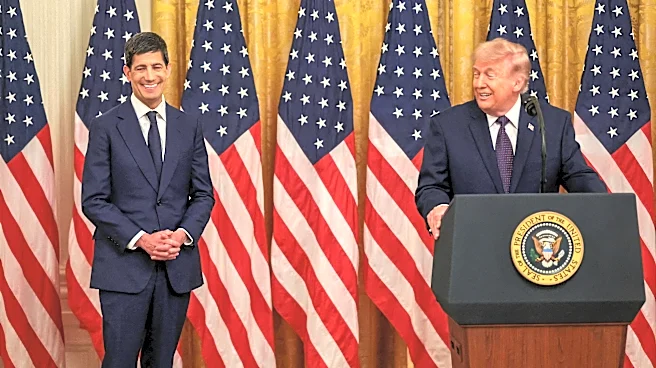
In a recent interview with Meet the Press, President Trump discussed the current economic situation in the context of ongoing tensions with Iran. He expressed his support for Federal Reserve Chair Kevin Warsh, describing him as 'fantastic' and emphasizing
his desire for Warsh to have the autonomy to make decisions regarding interest rates. This statement comes as the U.S. navigates economic uncertainties exacerbated by international conflicts. President Trump's comments highlight his approach to economic policy, which appears to favor allowing the Federal Reserve to operate independently without direct influence from the executive branch.
Why It's Important?
The independence of the Federal Reserve is a critical component of U.S. economic policy, as it allows for monetary decisions to be made based on economic indicators rather than political pressures. President Trump's endorsement of Chair Warsh's autonomy could reassure markets and stakeholders about the stability and predictability of U.S. monetary policy. This stance may also impact investor confidence and the broader economic landscape, particularly during times of geopolitical tension. The Federal Reserve's decisions on interest rates can significantly influence economic growth, inflation, and employment, making this a pivotal moment for U.S. economic strategy.
What's Next?
As the Federal Reserve continues to assess economic conditions, Chair Warsh's decisions on interest rates will be closely monitored by financial markets and policymakers. The ongoing situation with Iran may further complicate economic forecasts, potentially influencing future monetary policy. Stakeholders, including businesses and consumers, will be watching for any shifts in interest rates that could affect borrowing costs and economic activity. Additionally, President Trump's administration may continue to navigate the balance between supporting independent economic institutions and addressing immediate geopolitical challenges.