
What's Happening?
Newly obtained Savannah Police Department body-camera footage has provided a closer look at a confrontation between District 3 Alderwoman Linda Wilder-Bryan and responding officers at the scene of a deadly
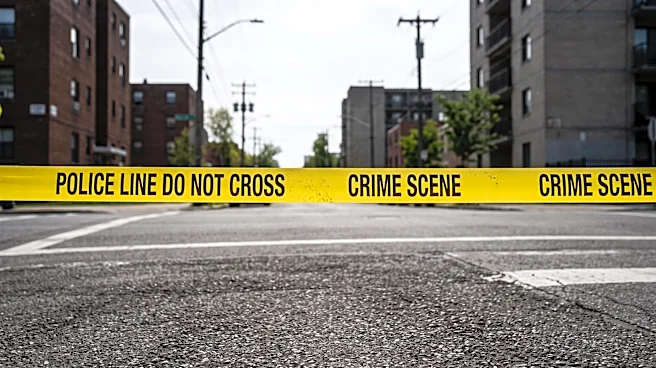
shooting on November 8. The incident occurred near East 33rd and Cedar streets, where two 27-year-old men, Tyreek Lester and Dashon Lawrence, were killed. The footage documents several interactions where Alderwoman Wilder-Bryan identified herself and attempted to obtain information, with one officer stating he did not recognize her. A more confrontational exchange occurred when officers began expanding the crime scene perimeter, and Wilder-Bryan refused to move, stating, 'I'm not moving.' She later explained she was trying to communicate with police leadership. This footage follows Wilder-Bryan's public accusations that officers treated her disrespectfully and questioned the department's handling of the crime scene, including allegations of insufficient medical supplies and improper shielding of a victim's body. Savannah Mayor Van Johnson has defended the police response, citing the need to secure a dangerous scene and protect the public.
Why It's Important?
This incident highlights significant tensions that can arise between elected officials and law enforcement during critical incidents, particularly in the immediate aftermath of violent crimes. The release of body-camera footage provides crucial context to differing accounts of the event, offering transparency but also potentially fueling public debate about police conduct and the role of local leaders at crime scenes. For the Savannah Police Department, the footage could either validate their procedures or prompt internal reviews regarding officer-citizen interactions, especially with public officials. For Alderwoman Wilder-Bryan, her actions and subsequent statements underscore concerns about community access to information and oversight of police operations. The broader implications touch upon public trust in law enforcement, the effectiveness of crime scene management, and the dynamics of power and authority in crisis situations within urban communities. The incident also brings renewed focus on neighborhood safety concerns in the Live Oak area, where residents have expressed increasing worries about violence.
What's Next?
Following the release of the body-camera footage, Alderwoman Linda Wilder-Bryan has declined further media interviews, stating she believes the appropriate next step is to establish a complete timeline, review all relevant evidence, and ensure the public receives an accurate account. She has called for a thorough, impartial investigation. Savannah Police Chief Lenny Gunther reportedly told Wilder-Bryan he would investigate her concerns, suggesting an internal review may be underway. The ongoing homicide investigation into the deaths of Tyreek Lester and Dashon Lawrence continues, with no arrests reported as of November 9. Residents of the Live Oak neighborhood are expected to continue raising concerns about safety, potentially leading to calls for increased police patrols and surveillance. The differing perspectives between the Alderwoman and Mayor Johnson may also prompt further public discussion or official inquiries into police protocols and community engagement during critical incidents.
Beyond the Headlines
This confrontation delves into the complex intersection of public service, community representation, and law enforcement authority. Alderwoman Wilder-Bryan's insistence on remaining at the scene, despite police directives, can be viewed as an attempt to fulfill her perceived duty to constituents and gather information firsthand, potentially challenging the established boundaries of a crime scene. Conversely, law enforcement's need to secure a scene and maintain operational control is paramount for evidence preservation and officer safety. The incident raises ethical questions about the appropriate level of access and involvement for elected officials at active crime scenes and the potential for such interactions to either aid or impede investigations. It also underscores the ongoing challenge for police departments to balance strict procedural adherence with community relations, especially when dealing with grieving families and concerned local leaders. The differing narratives highlight a potential disconnect in understanding roles and responsibilities during high-stress situations, which could lead to policy re-evaluations for both city officials and police departments.