
What's Happening?
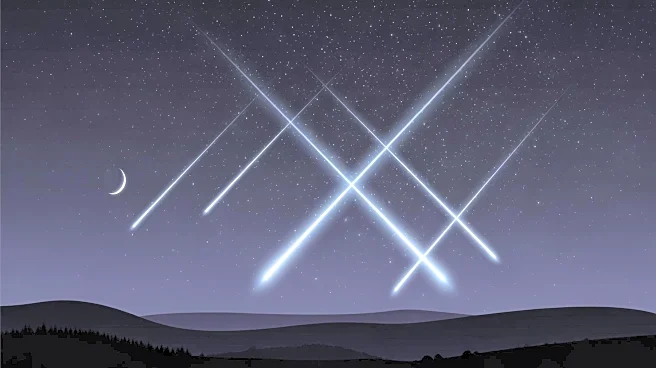
The Geminids meteor shower, one of the most anticipated celestial events of the year, is set to peak this weekend. Known for its bright and colorful meteors, the Geminids are expected to produce up to 150
meteors per hour at their peak, according to the American Meteor Society. The shower, which began on December 4 and will continue until December 17, is best viewed in the Northern Hemisphere. The meteors originate from the Gemini constellation, which will rise in the eastern sky after sunset. Observers are advised to find a location away from city lights for optimal viewing. The shower is unique as it is caused by the 3200 Phaethon asteroid, unlike most meteor showers that are fed by comets.
Why It's Important?
The Geminids meteor shower provides a significant opportunity for both amateur and professional astronomers to observe a high volume of meteors. This event not only offers a spectacular visual experience but also contributes to scientific research. The unique origin of the Geminids from an asteroid rather than a comet provides valuable data for understanding the composition and behavior of such celestial bodies. Additionally, the event encourages public interest in astronomy and science, fostering educational opportunities and community engagement in stargazing activities.
What's Next?
As the peak approaches, astronomers and enthusiasts are preparing for optimal viewing conditions. The American Meteor Society recommends observing on both December 12 and 13 to maximize the chances of seeing the meteors. The event is expected to draw significant public interest, with many planning to gather in areas with minimal light pollution. The shower's conclusion on December 17 will mark the end of this year's major meteor showers, with the next significant event being the Quadrantids in January.