
What's Happening?
A recent study led by scientists from the Laoshan Laboratory in China and Germany's GEOMAR Helmholtz Centre for Ocean Research Kiel has uncovered significant findings about the Antarctic Bottom Water (AABW)
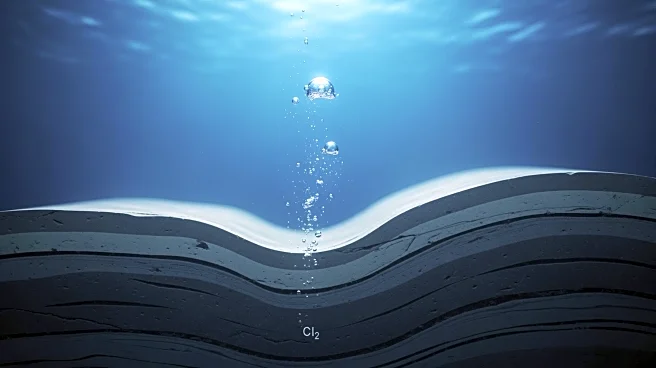
in the Southern Ocean. The research, published in Nature Geoscience, indicates that tens of thousands of years ago, a warming event led to the release of carbon dioxide from deep ocean waters, contributing to the end of the last Ice Age. The study suggests that as the planet warmed and ice sheets melted, the volume of AABW expanded, causing vertical mixing in the Southern Ocean and releasing stored carbon into the atmosphere. This historical pattern raises concerns about current warming trends and the potential for similar carbon releases.
Why It's Important?
The study's findings are crucial as they provide insights into how the ocean's response to past warming events can inform our understanding of current climate change dynamics. The rapid warming of deep Southern Ocean waters in recent decades could lead to significant carbon releases, exacerbating global temperature rise. This research underscores the importance of understanding oceanic processes in predicting future climate scenarios and highlights the vulnerability of communities to rising global temperatures. The potential for increased carbon emissions from oceanic sources could have profound implications for global climate policy and efforts to mitigate climate change.
What's Next?
The study's implications suggest a need for increased monitoring and research into oceanic carbon cycles and their impact on climate change. Policymakers and global leaders may need to consider these findings in developing strategies to address climate change, particularly in terms of reducing carbon emissions and transitioning to cleaner energy sources. The research could also prompt further studies into the role of oceanic processes in historical climate events, providing a more comprehensive understanding of the Earth's climate system.