






What's Happening?
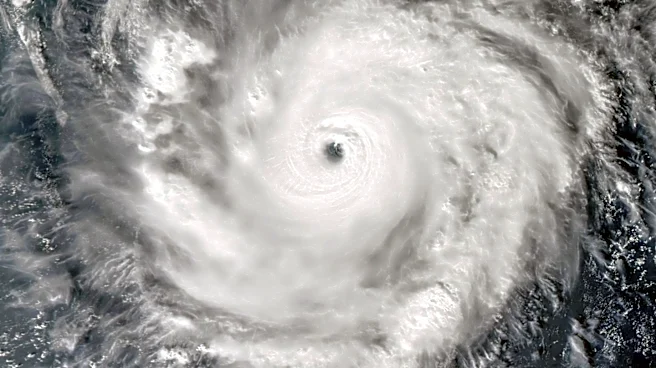
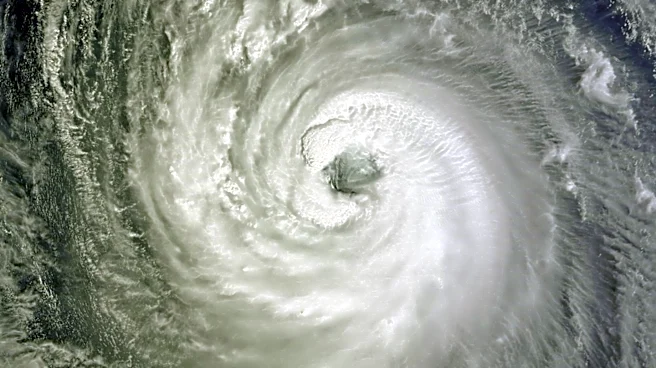
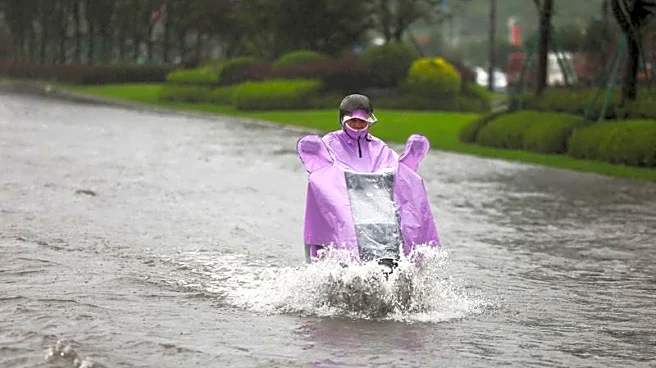
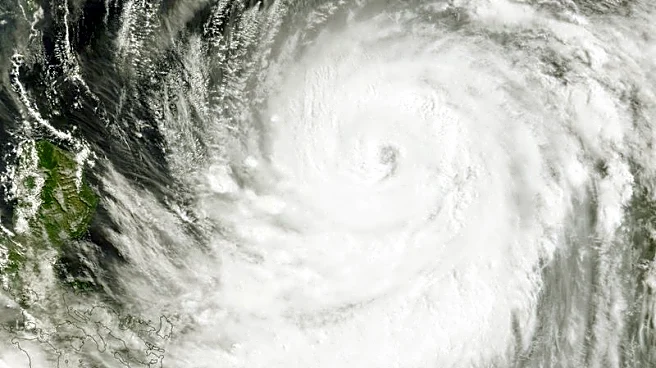
Typhoon Bavi made landfall in China's eastern province of Zhejiang, prompting the evacuation of more than 1.7 million people. The typhoon, which previously affected Japan's southern islands and Taiwan, brought strong winds and heavy rain to the region.
Chinese authorities issued high alerts and took precautionary measures, including suspending schools and ferry services, canceling hundreds of flights, and halting some high-speed railway services. The National Meteorological Center reported that Bavi had maximum sustained winds of 144 kph (89 mph) near its center. The typhoon is expected to move northwestward inland, gradually weakening. In response to the severe weather, the Chinese government allocated 40 million yuan ($5.9 million) for disaster relief efforts in Zhejiang and Fujian provinces.
Why It's Important?
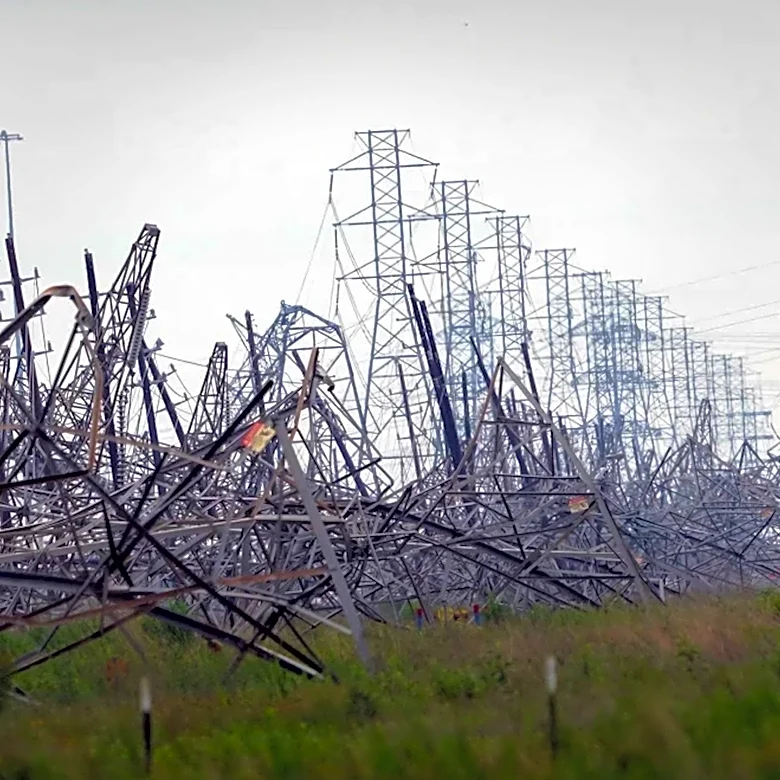
The impact of Typhoon Bavi underscores the vulnerability of coastal regions in China to severe weather events, which can lead to significant disruptions in daily life and economic activities. The large-scale evacuations and suspension of services highlight the challenges faced by authorities in ensuring public safety and minimizing damage. The financial allocation for disaster relief reflects the government's commitment to supporting affected regions, but also indicates the potential economic burden such natural disasters can impose. The situation also draws attention to the broader issue of climate change and its role in intensifying weather patterns, which could lead to more frequent and severe storms in the future.
What's Next?
As Typhoon Bavi moves inland, authorities will continue to monitor its progression and manage the aftermath of its impact. The focus will likely shift to recovery efforts, including restoring services and infrastructure, and providing aid to displaced residents. The response to this typhoon may also prompt discussions on improving disaster preparedness and resilience in vulnerable regions. Additionally, the international community may offer support or express concern, particularly if the situation worsens or if further natural disasters occur in the region.