





What's Happening?
A new Delaware law prohibits law enforcement agencies from publicly releasing the names and photos of suspects charged with felonies, unless it is deemed "necessary to protect the public's safety." This legislation, House Bill 59, took effect on October
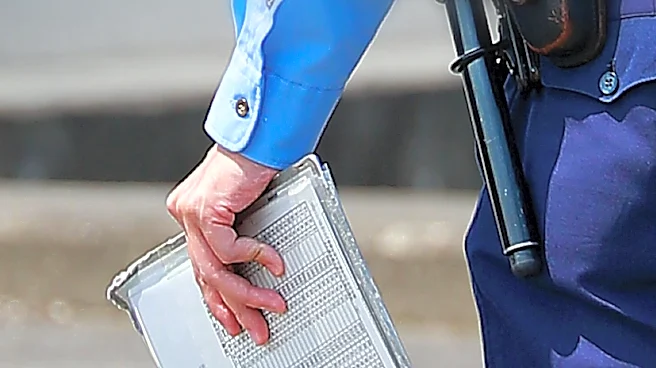
21st. Attorney General Kathy Jennings' office issued a memo to all Delaware police agencies, advising them on when they can and cannot release such information. The memo clarifies that names and photos should not be disclosed if a felony suspect is detained and there are no unidentified victims, as the individual behind bars poses no immediate threat to public safety. It also mandates against releasing names or photos in public corruption cases, even if bail is posted, arguing that white-collar criminals are not a public safety threat. Police agencies across the state, including Newark police Lt. Gregory D’Elia, have expressed disagreement with the law's restrictions, stating it will 'handcuff' their ability to inform the public.
Why It's Important?
This new Delaware law has significant implications for public transparency, law enforcement operations, and the public's right to information. By restricting the release of suspect identities and mugshots, the law aims to protect the privacy and due process rights of individuals accused of crimes, particularly those who are detained and thus not an immediate threat. However, law enforcement officials argue that this limitation hinders their ability to inform the public about potential dangers and to solicit community assistance in investigations. The debate highlights a tension between individual rights and public safety, potentially affecting how communities perceive crime and justice. It could also impact media reporting, as journalists would need to obtain suspect identities from non-law enforcement sources, such as court records, which are not easily searchable by date or crime type in Delaware.
What's Next?
Police agencies in Delaware, including the Delaware Association of Chiefs of Police, are following Attorney General Kathy Jennings' guidance but are actively seeking to amend or repeal the new law. Mat Marshall, a top aide to Jennings, confirmed that the Attorney General's office does not agree with the law and will lobby for its change. This indicates a potential legislative battle in the near future as law enforcement and public safety advocates push for revisions. In the interim, police departments will continue to operate under the current restrictions, which may lead to increased public frustration over a perceived lack of transparency. The media will also need to adapt its reporting practices to navigate these new limitations, potentially relying more on court documents and other public records to identify suspects.
Beyond the Headlines
The Delaware law restricting the release of suspect information delves into complex ethical and legal considerations surrounding privacy, public safety, and the role of the media in a democratic society. While the intent may be to prevent reputational damage to individuals who are presumed innocent until proven guilty, it raises questions about the public's right to know about criminal activity in their communities. The law's distinction between different types of felonies (e.g., violent crime vs. white-collar crime) in terms of public safety threat could also spark debate. This development could influence similar legislative efforts in other states, as jurisdictions grapple with balancing individual rights against the public's interest in transparency and safety. It also underscores the ongoing tension between law enforcement's operational needs and civil liberties advocacy.