



What's Happening?
The U.S. Bureau of Reclamation has released a new 10-year plan to manage the Colorado River, which is facing a severe water crisis due to over-allocation and climate change. The framework, set to replace the expiring 2026 guidelines, outlines parameters
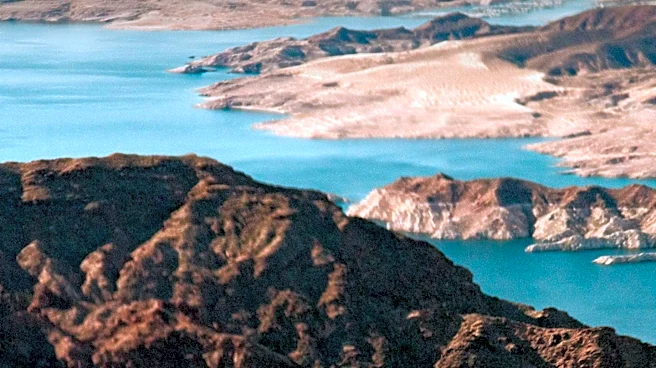
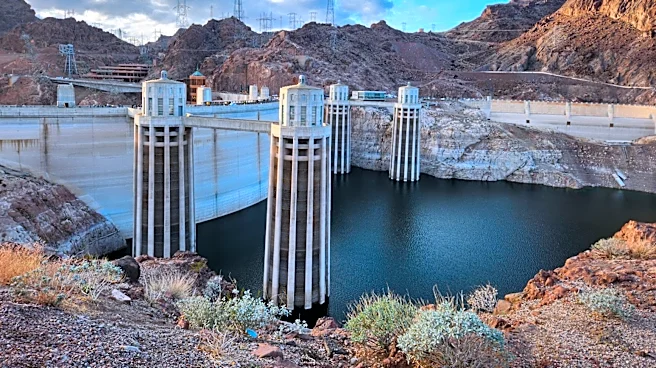
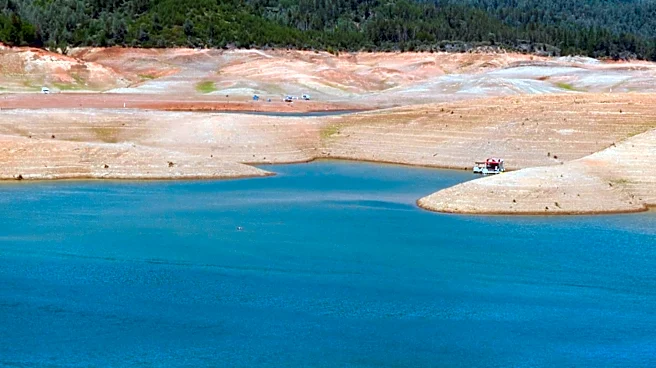
for operating guidelines to be decided every two years. Under this plan, the lower-basin states—California, Arizona, and Nevada—could collectively lose up to 3 million acre-feet of water annually, representing about 40% of their current supply. Specifically, these states face mandatory cuts of 1.25 million acre-feet in 2027 and 2028, with potential for larger reductions depending on conditions. The upper-basin states—Colorado, Utah, Wyoming, and New Mexico—have resisted mandatory cuts, arguing that lower-basin states are primarily responsible for reservoir depletion. Experts, however, view this federal plan as a temporary measure, a 'stopgap' to protect critical infrastructure like Lake Mead and Lake Powell, rather than a long-term solution, as it does not fully resolve the deep-seated conflicts among the seven basin states.
Why It's Important?
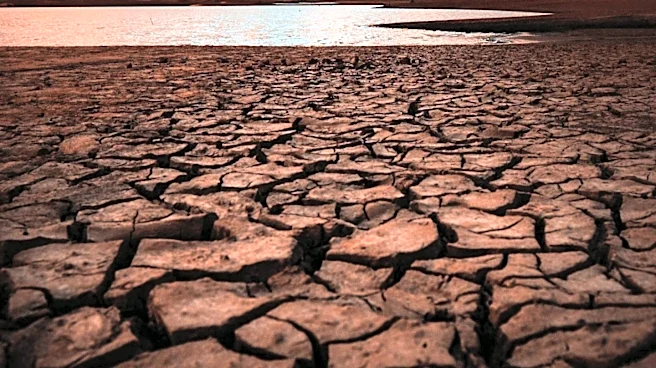
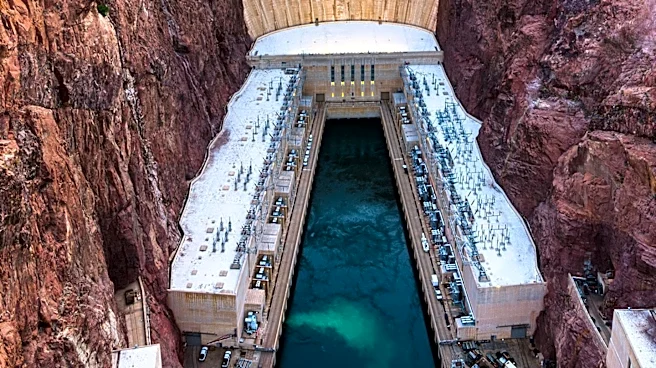
The Colorado River is a vital water source for approximately 40 million people across seven U.S. states, numerous Indigenous tribes, and two countries, supporting an estimated $1.4 trillion in economic activity and irrigating 5.5 million acres of farmland. The ongoing crisis threatens water supply, hydroelectric power generation for millions, and diverse ecosystems. This federal plan is significant because it represents a direct intervention by the U.S. government to address a critical resource shortage that has eluded state-level consensus for years. While it aims to prevent catastrophic failures like 'deadpool' conditions in major reservoirs, its perceived inadequacy by experts and some state officials highlights the immense challenge of balancing water demand with dwindling supply. The plan's focus on lower-basin cuts, without mandatory reductions for upper-basin states, continues to fuel interstate tensions and underscores the difficulty of achieving equitable solutions in a climate-stressed region.
What's Next?
The new federal framework will guide Colorado River management for the next decade, with specific operating guidelines to be determined every two years. The lower-basin states will face significant water reductions, and the federal government hopes to incentivize conservation in upper-basin states through mechanisms like water storage credits. However, the plan is widely seen as a bridge to a more comprehensive agreement, and negotiations among the seven basin states are expected to continue intensely over the next two years to find a more equitable and lasting solution. The threat of lawsuits remains high, with some states reportedly preparing for legal challenges, which could lead to protracted court battles and further complicate water management. Experts warn that without more substantial and balanced cuts, and innovative solutions like increased water recycling and new pricing signals for large users, the region could face renewed crisis in as little as two years.
Beyond the Headlines
This water crisis and the federal response illuminate profound ethical, legal, and cultural dimensions. The century-old water compact, based on an overestimation of the river's capacity, reflects a historical disconnect between resource allocation and environmental reality, a challenge exacerbated by climate change. The resistance of upper-basin states to mandatory cuts, while lower-basin states face significant reductions, raises questions of fairness, historical water rights, and shared responsibility in a changing climate. The potential for interstate water law conflicts to reach the U.S. Supreme Court underscores the high stakes and the absence of a clear, universally accepted framework for managing shared resources under extreme stress. This situation also highlights the broader societal challenge of adapting to climate change, requiring difficult decisions about economic activities, agricultural practices, and urban development in arid regions, ultimately forcing a re-evaluation of long-held assumptions about resource availability.