






What's Happening?
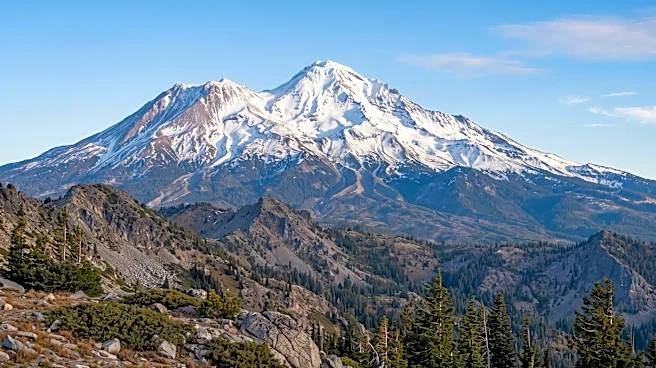
Three hikers were rescued from California's Mount Shasta after using Google's AI chatbot, Gemini, to plan their expedition. The group began their hike at 3 AM and reached the summit at 7 PM, significantly later than the recommended noon turnaround time.
During their descent in the dark, they contacted the Siskiyou County sheriff's office for directions and subsequently spent the night in Mud Creek Canyon before being rescued the following morning by Forest Service rangers and volunteers. The sheriff's office reported that Gemini advised the hikers to bring substantially less food and water than required for their trip, which unexpectedly extended into a multi-day ordeal. Authorities emphasized the importance of consulting local U.S. Forest Service ranger stations for accurate information and cautioned against relying solely on AI for trip planning.
Why It's Important?
This incident highlights the potential risks associated with over-reliance on artificial intelligence for critical planning, especially in environments where safety is paramount. While AI tools like Google Gemini can provide information, they may lack the nuanced understanding of real-world conditions, local expertise, and the ability to assess dynamic risks that human experts possess. For the public, this serves as a cautionary tale about verifying AI-generated advice with authoritative sources, particularly for activities like hiking and outdoor adventures where inadequate preparation can lead to dangerous situations. For technology developers, it underscores the need for robust disclaimers and perhaps built-in warnings for high-stakes advice, ensuring users understand the limitations of AI. The event also brings into focus the broader societal implications of AI integration into daily life, where critical thinking and human oversight remain indispensable.
What's Next?
Following this incident, it is likely that outdoor safety organizations and AI developers will reiterate warnings about the limitations of AI for trip planning. Google and other AI providers may consider implementing more prominent disclaimers or safety advisories within their AI tools when users query about activities with inherent risks. There could also be increased public education campaigns encouraging individuals to cross-reference AI-generated information with expert human advice, especially for travel, health, and safety-related matters. This event may also prompt discussions within the AI community about developing more sophisticated AI models that can better assess risk and provide more cautious or context-aware recommendations for sensitive topics. The incident serves as a reminder that while AI is a powerful tool, it is not a substitute for human judgment and expert knowledge in critical situations.
Beyond the Headlines
This rescue on Mount Shasta touches upon deeper implications regarding the evolving relationship between humans and artificial intelligence. It raises questions about accountability when AI provides flawed advice that leads to harm. While the hikers ultimately bear responsibility for their decisions, the incident prompts a discussion on the ethical obligations of AI developers to ensure their tools do not inadvertently promote unsafe practices. Culturally, as AI becomes more integrated into daily life, there's a risk of a 'trust deficit' if such incidents become more common, potentially eroding public confidence in AI's reliability. This event also highlights the ongoing challenge of distinguishing between AI's capabilities and its limitations, emphasizing the need for digital literacy that includes understanding when and how to critically evaluate AI-generated information, particularly in contexts where human well-being is at stake.