



What's Happening?
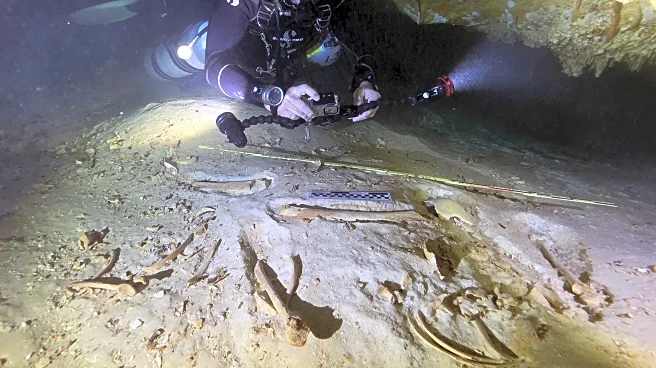
A prehistoric skeleton has been discovered in a flooded cave system along Mexico's Caribbean coast, believed to have been placed there as part of a ritual. The skeleton, found by cave-diving archaeologist Octavio del Río, is the 11th such find in the region
over the past three decades. The cave, which flooded at the end of the last ice age 8,000 years ago, is located between Tulum and Playa del Carmen. The skeleton was found 26 feet below the surface, suggesting it was placed there when the cave was dry. This discovery adds to the understanding of ancient human activity in the Yucatán Peninsula, where some of the oldest human remains in North America have been found.
Why It's Important?
The discovery of the skeleton provides valuable insights into the rituals and burial practices of ancient peoples in the Yucatán Peninsula. It highlights the cultural significance of the cenotes, which served as both water sources and sacred sites. Understanding these practices can offer a deeper understanding of the social and spiritual lives of early inhabitants. Additionally, the find underscores the importance of preserving these archaeological sites, which are threatened by modern development and environmental changes. Protecting these areas is crucial for maintaining the cultural heritage and historical knowledge they represent.
What's Next?
The Mexican government is working towards designating the cave system as a national protected area to safeguard its archaeological and ecological significance. This initiative aims to prevent further damage from development projects, such as the Maya Train, which have impacted the region. The designation is expected to be finalized in 2026. Meanwhile, researchers will continue to analyze the skeleton and other finds to piece together the history of human migration and settlement in the area. These efforts will contribute to a broader understanding of prehistoric human activity in the Americas.