
What's Happening?
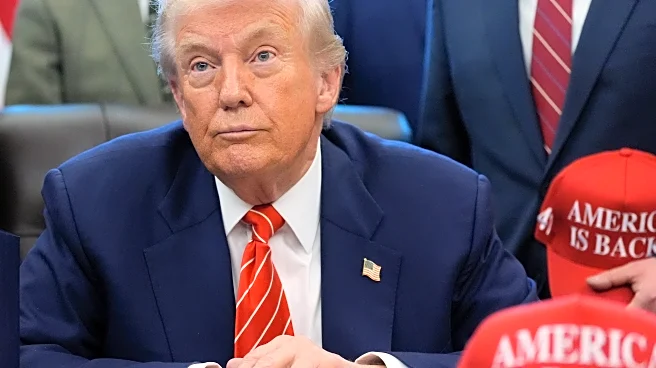
President Trump has taken a bold step by capturing Venezuelan President Nicolas Maduro, signaling a significant shift in U.S. foreign policy in Latin America. This move, reminiscent of the U.S. invasion
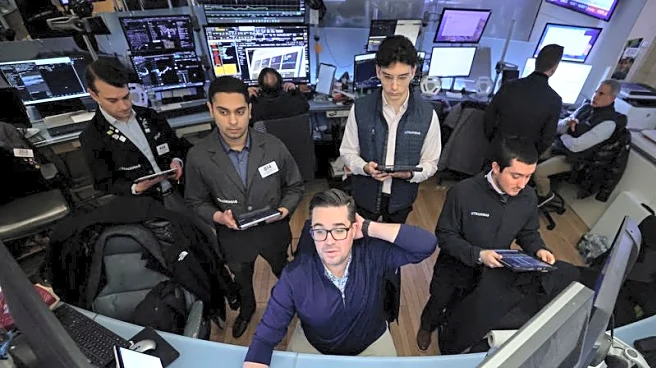
of Panama in 1989, has raised concerns about geopolitical stability in the region. Despite the dramatic nature of the action, financial markets have shown a relatively muted response, with Asian stocks rising and oil prices experiencing only modest declines. Analysts suggest that the market's calm reaction is due to Venezuela's limited oil production capacity relative to global output. However, the potential for unlocking Venezuela's vast oil reserves could have long-term implications for the energy sector.
Why It's Important?
The capture of Maduro and the potential U.S. control over Venezuela's oil resources could have far-reaching consequences for global energy markets and geopolitical dynamics. American oil companies may face challenges in investing and restoring production in Venezuela, but the prospect of accessing the country's oil reserves is significant. The move also highlights the broader geopolitical risks associated with U.S. foreign policy under President Trump, particularly in relation to other regions like Taiwan and Iran. The defense sector may see increased spending as countries respond to the U.S.'s willingness to use military force, while the uncertainty surrounding U.S. policies could impact the dollar's status as a safe-haven currency.
What's Next?
The immediate focus will be on how the U.S. and international investors navigate the geopolitical landscape following this bold move. The defense sector is likely to experience growth as nations bolster their military capabilities in response to U.S. actions. Additionally, the financial markets will continue to assess the implications of this strategy on global supply chains and energy markets. Investors will be closely watching for any further U.S. actions in Latin America and other regions, as well as potential responses from countries like China and Iran.
Beyond the Headlines
This development underscores the complexities of geopolitical risk management for investors, as traditional market indicators may not fully capture the potential impacts of such actions. The situation also raises ethical and legal questions about the use of military force in foreign policy and its implications for international relations. The long-term effects on U.S. diplomatic relations and global stability remain uncertain, as countries and investors adjust to a new era of geopolitical maneuvering.