


What's Happening?
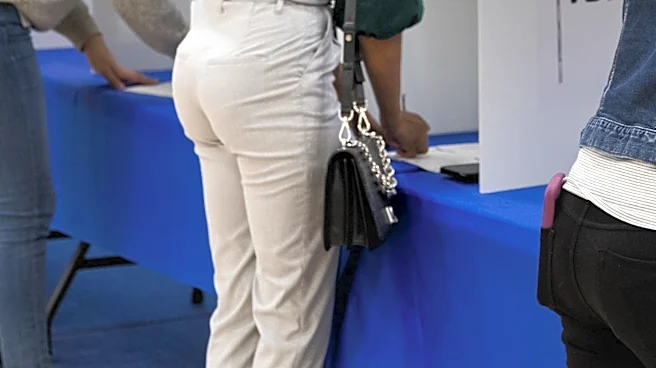
Julianna Glasse, a former evangelical Christian singer and author of “This is What Happens When Women Read,” recently contributed an op-ed to the Washington Post. In her piece, Glasse highlighted the significant pressures evangelical women face when casting
their ballots. She discussed her personal experience of voting in alignment with her husband's choices and noted that millions of other women continue this practice. Glasse elaborated on these dynamics during an interview with host Robin Young, emphasizing the widespread nature of this phenomenon within the evangelical community. Her insights shed light on the social and religious factors that can influence voting behavior among this demographic.
Why It's Important?
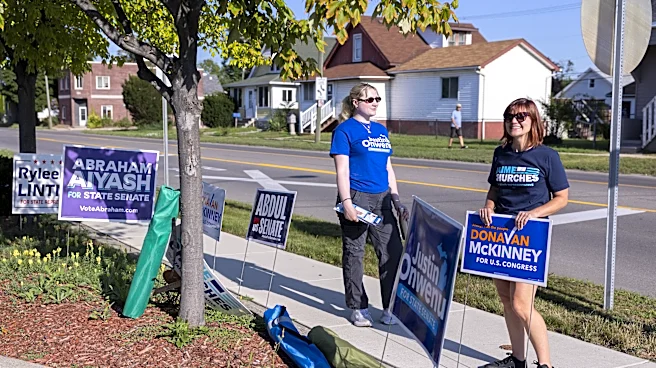
The discussion surrounding evangelical women's voting patterns is important for understanding the broader landscape of U.S. politics and electoral outcomes. The evangelical community represents a substantial voting bloc, and the influence of spousal voting can have significant implications for political campaigns and policy decisions. If a large segment of evangelical women consistently vote in accordance with their husbands, it suggests a powerful, unified voting force that can sway elections, particularly in conservative-leaning states or districts. This dynamic can affect the representation of women's issues in politics and potentially limit the diversity of political thought within evangelical households. Understanding these pressures is crucial for political strategists, researchers, and anyone interested in the socio-political factors shaping American elections.
Beyond the Headlines
The phenomenon described by Julianna Glasse extends beyond simple voting preferences, touching upon deeper cultural and theological interpretations within evangelical Christianity. The concept of headship and submission, often taught within some evangelical circles, can influence various aspects of a woman's life, including her political choices. This can lead to a perceived expectation for wives to align with their husbands' views, not just in voting but in other areas of public and private life. Such dynamics raise questions about individual autonomy, gender roles within religious communities, and the intersection of faith and politics. It also highlights the potential for internal conflict for women who may hold differing political opinions from their spouses but feel compelled to conform. This issue underscores the complex interplay between personal belief, community expectations, and political participation in the U.S.