






What's Happening?
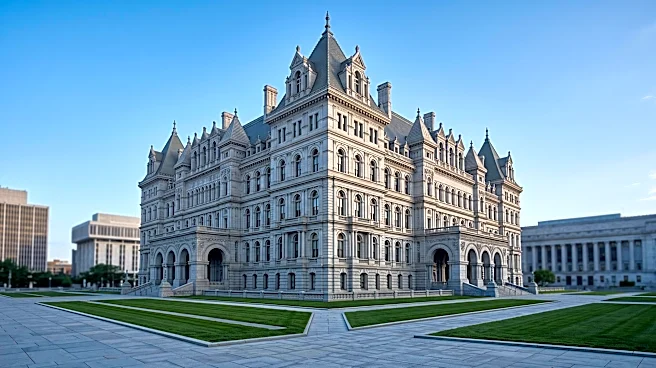
Federal authorities have charged a woman with a federal terrorism offense for allegedly plotting to bomb the New York State Capitol building in Albany. The suspect, 35-year-old Jessica Bowie, is accused of pledging allegiance to the Islamic State earlier
this year. According to the criminal complaint, Bowie conducted surveillance at the Capitol at least five times, taking numerous photos, and requested a gun to use against law enforcement. The FBI utilized a sting operation as part of its investigation, with undercover informants meeting Bowie, providing her with materials and funds to purchase bomb components, and eventually handing her a fake explosive device and a gun she had paid for. Bowie was arrested on Wednesday after taking possession of these items. New York Governor Kathy Hochul stated that due to law enforcement's early interception, there was no active danger to the Capitol.
Why It's Important?
This incident underscores the persistent threat of domestic terrorism and the ongoing efforts by law enforcement agencies, such as the FBI, to prevent such attacks. The use of a sting operation highlights a common but often debated tactic in counter-terrorism, where authorities engage with suspects to gather evidence and neutralize threats before they materialize. The alleged plot against a state capitol building emphasizes the vulnerability of government institutions and the need for heightened security measures. It also brings to light the potential for individuals to be radicalized and motivated by extremist ideologies, posing a significant challenge to national security. The case serves as a reminder of the continuous vigilance required to protect public spaces and government officials from violent acts.
What's Next?
Jessica Bowie has been charged with attempting to provide material support for a designated terrorist organization and has been ordered detained pending trial. Her legal representation, a federal public defender, has declined to comment on the case. The investigation will likely continue to uncover any potential connections or broader networks. The use of social media accounts by investigators to identify Bowie as a threat suggests an ongoing focus on online radicalization. This case may lead to further discussions about the balance between civil liberties and national security in the context of sting operations and surveillance. Security protocols at the New York State Capitol and other government buildings may be reviewed and potentially enhanced in response to this alleged plot.
Beyond the Headlines
The alleged plot raises deeper questions about the pathways to radicalization and the psychological factors that lead individuals to embrace extremist ideologies. The fact that the suspect is a U.S. citizen highlights the internal threat landscape, which often receives less public attention than international terrorism. The FBI's reliance on a sting operation, while effective in preventing an attack, also sparks ethical and legal debates about entrapment and the extent of government intervention in potential criminal activities. This incident could contribute to broader conversations about mental health support, community engagement, and counter-radicalization programs aimed at addressing the root causes of extremist behavior within the United States. It also reinforces the complex challenges faced by law enforcement in identifying and neutralizing threats in a digital age.