



What's Happening?
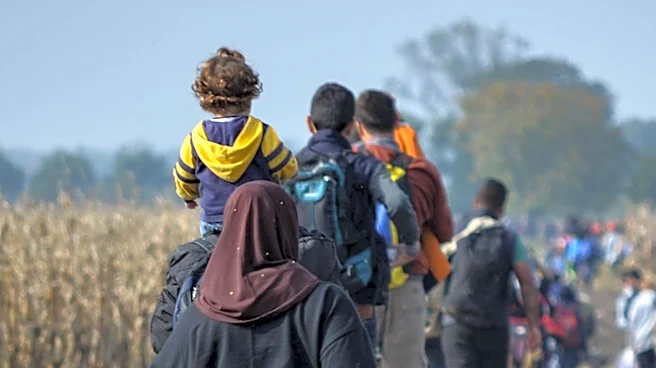
The United Nations High Commissioner for Refugees (UNHCR) has issued a call for applications to enhance the inclusion of refugees and internally displaced people in Medellín and the Aburrá Valley Metropolitan Area, Colombia. This initiative aims to support
Community-Based Organisations (OBCs) and Refugee-Led Organisations (RLOs) through direct financing, capacity building, and community participation. The program focuses on fostering employment, entrepreneurship, skills training, financial inclusion, and sustainable livelihoods for displaced populations. UNHCR prioritizes organizations actively working in these areas and demonstrating a clear connection between their activities and the socioeconomic inclusion of refugees and internally displaced individuals. The call emphasizes community-led approaches and collaborative efforts among various local actors to create more coordinated responses to inclusion challenges. The deadline for applications is August 9, 2026.
Why It's Important?
This UNHCR initiative is crucial for addressing the significant barriers refugees and internally displaced people face in accessing formal employment, income generation, and financial services. By directly supporting local and refugee-led organizations, the program promotes a 'localization' approach, empowering those closest to the affected communities to design and implement relevant solutions. This strategy ensures that interventions are tailored to specific local needs and contexts, fostering greater ownership and sustainability. Strengthening these organizations not only improves access to essential services and economic opportunities for displaced populations but also enhances their participation in decisions affecting their lives. The focus on durable solutions, such as long-term employment and financial inclusion, is vital for transitioning individuals from dependency to self-reliance, contributing to the overall stability and development of the host communities in Colombia.
What's Next?
Organizations interested in participating must ensure their activities align with the call's objectives, demonstrating an active presence in Medellín or the Aburrá Valley Metropolitan Area and a clear focus on supporting refugees and internally displaced people. Successful applicants will receive direct financing and capacity-building support to implement community-led initiatives. The program will involve ongoing monitoring and evaluation to track progress in areas such as employment readiness, skills development, and financial inclusion. UNHCR will continue to foster collaboration among OBCs, RLOs, and other community actors to build robust local networks. The long-term goal is to establish sustainable pathways for socioeconomic inclusion, with continuous efforts to document lessons learned and best practices to inform future strategies for refugee integration and support.
Beyond the Headlines
The UNHCR's emphasis on direct financing and capacity building for local and refugee-led organizations signifies a broader shift towards more localized humanitarian aid. This approach recognizes the invaluable knowledge and existing social capital within affected communities, moving beyond traditional top-down aid models. By empowering these grassroots organizations, the initiative not only addresses immediate needs but also builds long-term resilience and self-sufficiency among displaced populations. This strategy has profound implications for the dignity and agency of refugees, allowing them to be active participants in their own recovery and integration. Furthermore, the focus on economic inclusion through employment and entrepreneurship can mitigate potential social tensions by demonstrating the positive contributions of refugees to the local economy, fostering greater acceptance and integration within Colombian society.