









What's Happening?
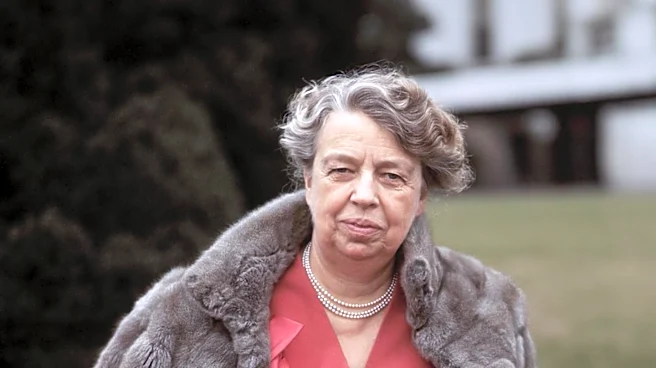
During World War II, Eleanor Roosevelt, then-First Lady of the United States, actively supported famine relief efforts for Greece, which was suffering under Axis occupation. She utilized her public platform and her syndicated newspaper column, 'My Day,'
to raise awareness about the severe hardships and devastating famine faced by the Greek people. Roosevelt encouraged humanitarian assistance through the Greek War Relief Association, an organization established in the fall of 1940 with figures like film executive Spyros Skouras among its leaders. In an August 3, 1942, column, she appealed for financial donations, noting that the Association had been authorized to send larger amounts of food to Greece and continuously needed funds. She highlighted the bravery of Greece's fight against the Axis powers and expressed hope that aid would prevent women and children from dying of starvation in Greek cities. Her efforts continued throughout the occupation, as evidenced by a January 3, 1944, column where she discussed sending baby sets and the Greek War Relief Association's goal to collect twenty million garments.
Why It's Important?
Eleanor Roosevelt's advocacy for Greek famine relief during World War II underscores the significant role of public figures in galvanizing humanitarian efforts during international crises. Her actions not only drew crucial attention to the plight of the Greek people but also mobilized American citizens to contribute to relief efforts. This period demonstrated how the U.S., through both official policy and public support, extended aid to nations resisting aggression. The Greek War Relief Association's success in collecting donations and garments highlights the American public's capacity for generosity and solidarity in times of global conflict. This historical precedent illustrates the enduring American tradition of humanitarian intervention and the impact of influential voices in shaping public opinion and directing resources towards international aid. The support provided helped alleviate suffering and reinforced the bonds between the U.S. and its allies.
What's Next?
While this event is historical, its legacy continues to inform modern humanitarian responses. The mechanisms established during WWII, such as organized relief associations and public appeals, laid groundwork for future international aid organizations and strategies. The emphasis on public awareness and direct citizen involvement, as championed by Eleanor Roosevelt, remains a critical component of contemporary disaster relief and humanitarian campaigns. Future international crises will likely continue to see similar calls for public support and the involvement of prominent figures to raise awareness and secure resources. The historical success of these efforts serves as a model for how nations and their citizens can collectively address widespread suffering caused by conflict or natural disasters.
Beyond the Headlines
Eleanor Roosevelt's involvement in Greek famine relief extends beyond immediate humanitarian aid, touching upon deeper ethical and cultural dimensions. Her appeals highlighted the moral imperative to assist those suffering from the consequences of war, framing it as a shared human responsibility. By connecting the Greek people's struggle to the broader fight against Axis aggression, she fostered a sense of international solidarity and mutual support among the United Nations. This period also showcased the power of media, specifically her newspaper column, in shaping public discourse and mobilizing collective action. The recognition of Greece's 'gallant fight' by both Eleanor Roosevelt and President Franklin D. Roosevelt underscored the cultural and historical ties between the U.S. and Greece, reinforcing the idea of shared democratic values. This historical episode serves as a testament to the enduring impact of compassionate leadership and organized humanitarianism in times of global upheaval.