



What's Happening?
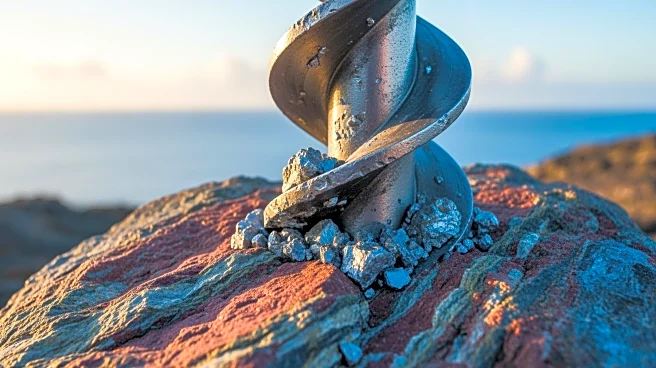
Japan is set to begin testing the extraction of rare earth elements from the seabed near Minamitorishima, a remote island, as part of its strategy to reduce reliance on China for these critical materials. The operation, scheduled from January 11 to February
14, will involve testing deep-sea mining equipment to extract rare-earth-rich mud from depths of around 6,000 meters. This initiative is part of a broader effort by Japan, the United States, and other Pacific allies to increase rare earth production and secure supply chains. The Japanese government has invested approximately 40 billion yen ($256 million) in this project since 2018. The operation will include continuous environmental impact assessments, and if successful, could lead to a full-scale mining operation by February 2027.
Why It's Important?
Rare earth elements are crucial for manufacturing a wide range of modern technologies, including electric vehicle batteries, microchips, and advanced military systems. Currently, China dominates the global supply of these materials, accounting for about two-thirds of the output. This dominance has been used as a geopolitical tool, as seen when China curbed exports in response to tariff hikes by President Trump. Japan's initiative represents a significant step towards diversifying the global supply chain and reducing dependency on China. Successful extraction and processing of rare earths from Minamitorishima could enhance Japan's industrial resilience and contribute to a more balanced global market.
What's Next?
If the trial mining operation proves successful, Japan plans to commence full-scale mining by 2027. This could significantly alter the dynamics of the global rare earth market, potentially reducing China's influence. The initiative also aligns with agreements made between Japan and the United States to cooperate on critical mineral supply chains. However, the project faces challenges, including technical feasibility, environmental concerns, and geopolitical tensions, particularly with Chinese naval activities observed near the island.
Beyond the Headlines
The development of a domestic rare earth supply chain in Japan could have long-term implications for global trade and security. It may encourage other nations to explore similar initiatives, leading to a more diversified and resilient global supply chain. Additionally, the environmental impact of deep-sea mining remains a critical concern, necessitating careful management to prevent ecological damage. The geopolitical landscape could also shift, as countries seek to secure their own resources and reduce reliance on dominant suppliers like China.