


What's Happening?
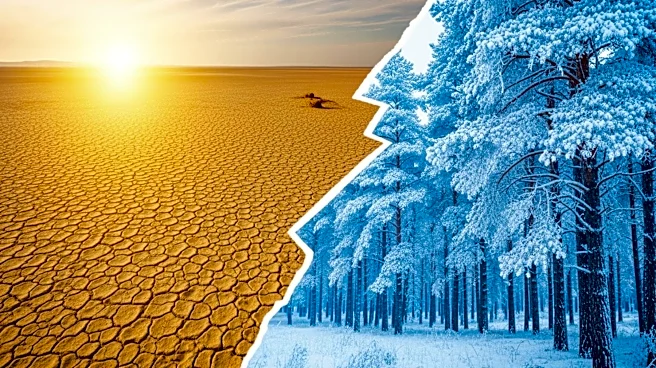
The contiguous United States is experiencing a dramatic weather shift, with record-breaking heat giving way to freezing temperatures. This change is attributed to a cold front originating from Alaska, where unusually cold and snowy conditions have persisted.
States that recently experienced high temperatures, such as those in the Midwest and Northeast, are now facing a sudden drop in temperatures, with forecasts predicting snow flurries and potential blossom loss. The National Weather Service has issued warnings for freezing temperatures affecting nearly 100 million people across a wide area.
Why It's Important?
This weather phenomenon highlights the interconnectedness of global climate patterns and the impact of regional anomalies on broader weather systems. The sudden temperature drop poses challenges for agriculture, as early blooms may be damaged by the freeze, affecting crop yields and economic stability in affected regions. The event underscores the importance of understanding and adapting to climate variability, as well as the need for robust infrastructure and emergency preparedness to mitigate the effects of extreme weather. The situation also raises awareness of the broader implications of climate change and the need for comprehensive environmental policies.
What's Next?
As the cold front moves through the U.S., affected regions will need to prepare for potential agricultural impacts and disruptions to daily life. The National Weather Service will continue to monitor the situation and provide updates to help communities respond effectively. In the longer term, this event may prompt discussions on climate resilience and the importance of investing in sustainable practices to mitigate the effects of climate change. Policymakers and scientists may use this opportunity to advocate for stronger environmental regulations and increased funding for climate research.