



What's Happening?
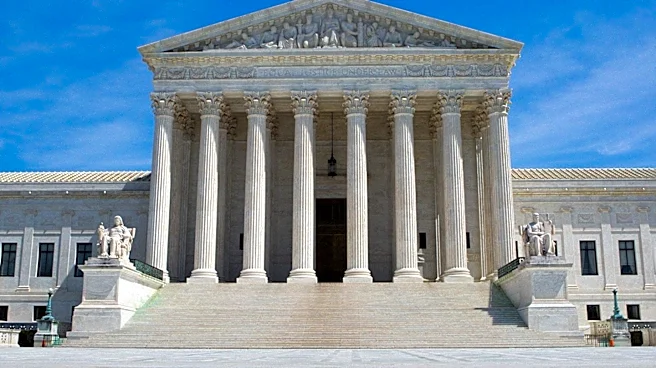
The Supreme Court is currently deliberating whether to significantly narrow or entirely eliminate the ability of individuals to sue federal agents for monetary damages when their constitutional rights have been violated. This issue was central to arguments
heard in a case involving a federal prison inmate in Hawaii who suffered a broken tailbone and sued a prison nurse for cruel and unusual punishment. The Court's conservative justices are divided on whether to merely limit such lawsuits, upholding past rulings but going no further, or to overturn the precedent set by the 1971 *Bivens* decision, which first authorized such constitutional claims. Chief Justice John G. Roberts Jr. and Justice Brett M. Kavanaugh have indicated a preference for a more cautious, incremental approach, while other conservative justices have previously suggested ending such lawsuits entirely. The outcome could have significant implications for accountability of federal agents, including immigration agents.
Why It's Important?
This Supreme Court deliberation is critical because it directly impacts the accountability of federal law enforcement and the ability of citizens to seek redress for constitutional violations. If the Court severely limits or bars these lawsuits, it could create a significant gap in accountability for federal agents, potentially allowing them to act with greater impunity. This contrasts with state and local police officers, who can be sued for constitutional violations under existing laws. The decision will shape the balance between protecting individual rights and shielding federal employees from litigation. It could also influence public trust in federal agencies and the perception of justice for victims of misconduct by federal agents, particularly in sensitive areas like immigration enforcement.
What's Next?
The Supreme Court's decision in *Nielsen vs. Watanabe* is pending and will clarify the future of constitutional lawsuits against federal agents. Regardless of the ruling, legislative efforts are already underway to address this issue. Democratic Senators Alex Padilla and Richard Blumenthal have proposed the 'Accountability for Federal Law Enforcement Act,' which aims to allow victims to sue federal agents for constitutional and civil rights violations, thereby extending the same legal accountability to federal agents that applies to state and local officials. This legislative push indicates that even if the Supreme Court restricts these lawsuits, Congress may attempt to establish a statutory right to sue, setting up a potential legislative battle.
Beyond the Headlines
The debate over suing federal agents for constitutional violations touches upon fundamental principles of governance, individual rights, and the scope of federal power. The historical context reveals a long-standing tension between protecting citizens from government overreach and ensuring that federal employees can perform their duties without undue fear of litigation. A decision to severely limit these lawsuits could have broader implications for civil liberties, potentially creating a two-tiered system of accountability where federal agents are less accountable than their state and local counterparts. This could lead to increased calls for police reform and greater oversight of federal agencies, highlighting the ongoing struggle to balance security with individual freedoms in a democratic society.