
What's Happening?
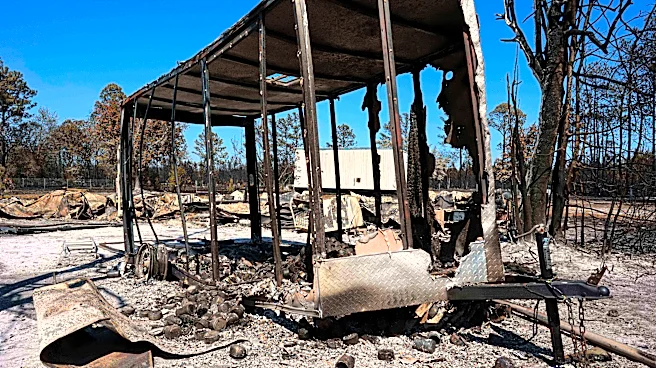
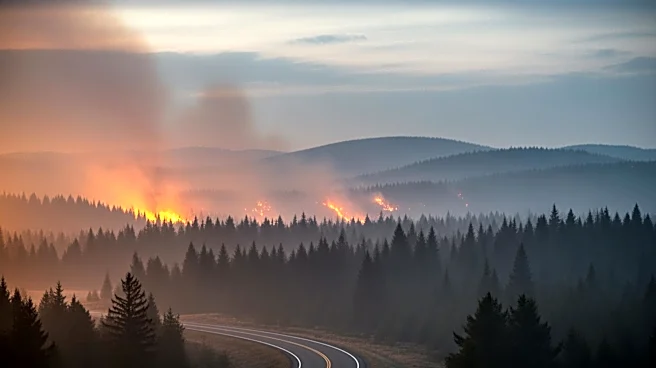
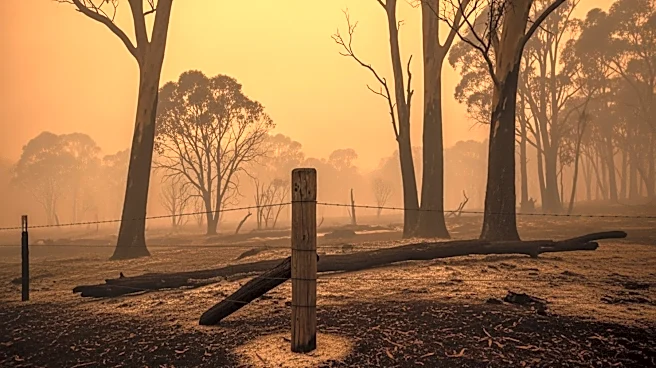
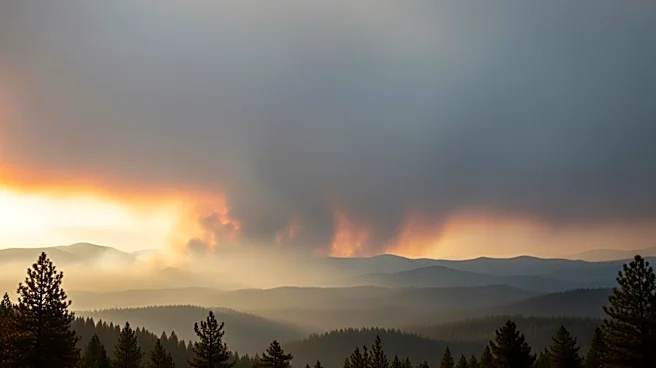
Wildfires are increasingly contaminating drinking water supplies in the U.S. by introducing pollutants and damaging infrastructure. According to NASA, the intensifying wildfire activity, driven by climate
change, is degrading water quality in forested watersheds that supply two-thirds of U.S. municipalities. Contaminants such as heavy metals, organic carbon, and volatile organic compounds (VOCs) are released into water systems during and after fires. The breakdown of PVC pipes at high temperatures further exacerbates contamination. Residents in affected areas are advised to follow local water advisories and consider long-term solutions like reducing plastic use in infrastructure and implementing controlled burns to manage fire severity.
Why It's Important?
The contamination of drinking water due to wildfires poses a significant public health risk, as municipal treatment facilities may not be equipped to handle the extreme levels of pollutants. This issue underscores the need for improved infrastructure resilience and proactive land management strategies to mitigate the impact of wildfires. As climate change continues to extend wildfire seasons and increase their intensity, addressing these challenges is critical to ensuring safe drinking water and protecting public health. The situation also highlights the broader implications of climate change on environmental and human health.