







What's Happening?
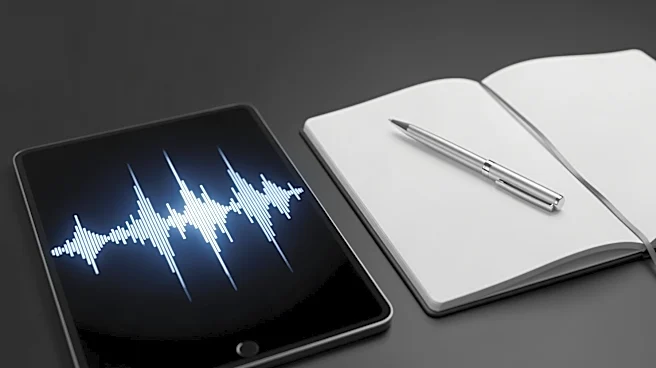
A study conducted by Digital Promise, a nonprofit organization focused on equity and technology in education, has examined the effects of text-to-speech features on student performance during standardized tests. The research specifically analyzed how
8th graders utilized this feature in a geometry problem on the National Assessment of Educational Progress. The study found that approximately 7% of students, including English learners, special education students, and students of color, used the text-to-speech option. The results indicated that the lowest-performing students benefited from the feature, as they were more likely to answer correctly if they listened to the question being read aloud. However, the feature did not significantly impact the highest-performing students, and mid-range performers were less likely to answer correctly if they frequently toggled the feature on and off.
Why It's Important?
The findings of this study highlight the nuanced role that educational technology can play in supporting student learning. For lower-achieving students, text-to-speech can be a valuable tool, potentially leveling the playing field by aiding comprehension and performance. However, the study also underscores the importance of proper implementation and practice with such tools. Teachers are encouraged to integrate text-to-speech into regular instruction, allowing students to become familiar with its use before test day. This approach could mitigate potential distractions and enhance the tool's effectiveness. The study's insights are particularly relevant as debates continue over the role of technology in education, with some educators and parents expressing concerns about screen time and the efficacy of digital tools.
What's Next?
The study suggests that educators should focus on training students to use text-to-speech technologies effectively, treating them as essential problem-solving strategies. This involves modeling good usage and incorporating the tools into everyday learning activities. As states consider policies to limit screen time in schools, the findings could inform decisions about which technologies to prioritize and how to implement them to maximize educational benefits. Further research may explore the specific conditions under which educational technologies are most beneficial, potentially guiding future educational policies and practices.