






What's Happening?
California Governor Gavin Newsom has declared a state of emergency in response to a potential chemical disaster in Orange County. The emergency proclamation aims to provide additional support to local responders dealing with a hazardous situation at a facility
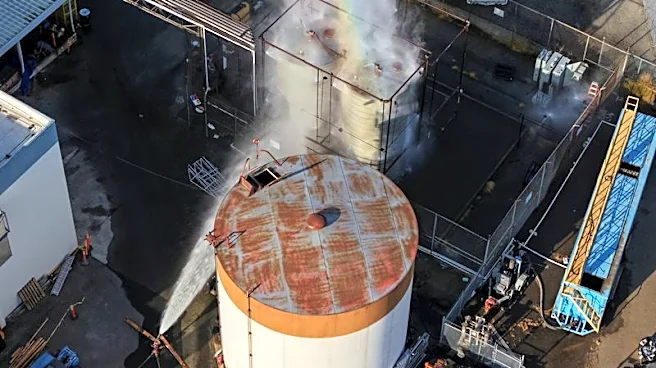
in Garden Grove. A storage tank containing methyl methacrylate, a highly flammable chemical used in resins and plastics, is at risk of exploding or leaking. The tank, owned by GKN Aerospace, holds between 6,000 and 7,000 gallons of the chemical and has been off-gassing, raising concerns about a possible failure. Efforts by firefighters to cool the tank with water have been unsuccessful, and emergency teams are working to neutralize the threat and prepare for potential spills or explosions. Approximately 40,000 residents have been ordered to evacuate, and state-owned properties are being used to shelter those affected.
Why It's Important?
The declaration of a state of emergency underscores the severity of the situation and the potential risk to public safety. The chemical involved, methyl methacrylate, poses significant health and environmental hazards if released. The evacuation of 40,000 residents highlights the scale of the threat and the need for swift and effective response measures. The incident also raises questions about industrial safety practices and the preparedness of local and state agencies to handle chemical emergencies. The outcome of this situation could influence future regulatory policies and emergency response strategies in California and beyond.
What's Next?
Emergency responders are actively working to mitigate the risk of an explosion or chemical spill. They are exploring various strategies, including the use of neutralizing agents and containment measures, to prevent a disaster. The situation is being closely monitored, and additional resources are being mobilized from across the country to support local efforts. The response and outcome of this emergency will likely be scrutinized by policymakers and industry leaders, potentially leading to changes in safety regulations and emergency preparedness protocols.