






What's Happening?
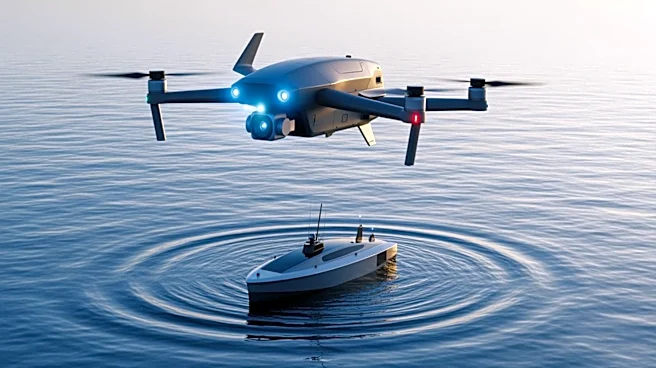
The U.S. Marines, in collaboration with Naval Special Warfare operators, have successfully conducted a test where a first-person view (FPV) drone was launched from a naval craft to strike an unmanned vessel. This test, conducted by the III Expeditionary
Operations Training Group out of Okinawa, Japan, marks a significant advancement in the Marines' capabilities to engage maritime targets using innovative technology. The unmanned surface vessel was designed by the Marines themselves and was destroyed during the test, showcasing the potential for integrating drone technology into amphibious operations.
Why It's Important?
This development is crucial as it demonstrates the Marines' ability to adapt to modern warfare challenges, particularly in contested maritime environments. The use of drones for targeting and reconnaissance enhances the operational flexibility and effectiveness of the U.S. military, especially in the Pacific region where tensions with China are rising. The ability to deploy unmanned systems tailored to specific battlefield needs could provide a strategic advantage in potential conflicts, allowing for more efficient and precise military operations.
What's Next?
The success of this test may lead to further integration of drone technology within the Marine Corps and other branches of the U.S. military. The Marines are expected to continue developing and refining their unmanned systems capabilities, potentially expanding their use in various operational scenarios. This could involve increased investment in drone technology and training programs to ensure readiness for future conflicts. The broader military strategy may also evolve to incorporate these advancements, emphasizing the importance of technological innovation in maintaining military superiority.
Beyond the Headlines
The test highlights the growing role of unmanned systems in modern warfare, raising questions about the ethical and legal implications of autonomous weapons. As the military continues to develop these technologies, there will be ongoing debates about their use in combat and the potential risks associated with autonomous decision-making. Additionally, the reliance on drones and other unmanned systems may influence future military doctrines and strategies, shaping the nature of warfare in the 21st century.