
What's Happening?
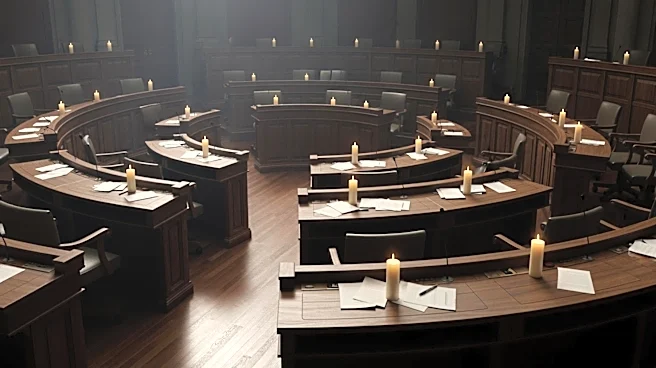
Democratic state representatives in Minnesota have initiated a sit-in within the state house chamber following the Republican speaker's refusal to bring a gun violence prevention bill to a vote. The sit-in,
which began at approximately 9 PM local time, was announced by Democratic Representative Samantha Sencer-Mura. The bill, which has already passed the Democrat-controlled Minnesota Senate, includes measures such as bans on semi-automatic military-style assault weapons, large-capacity magazines, and ghost guns, along with regulations for safe firearm storage and school threat reporting systems. The push for these new laws follows a tragic school shooting at Annunciation Catholic Church last August, which resulted in the deaths of two students. Despite the urgency expressed by advocates, including families affected by the shooting, the bill has faced opposition from the Republican-controlled house, where a procedural motion to bring it to a vote failed.
Why It's Important?
The sit-in by Minnesota lawmakers highlights the ongoing national debate over gun control and the legislative challenges faced in enacting stricter gun laws. The bill's passage is seen as crucial by advocates who argue that it could prevent future tragedies similar to the Annunciation shooting. The resistance from the Republican speaker and the Minnesota Gun Owners Caucus underscores the deep political divide on gun rights and safety measures. The outcome of this legislative battle could set a precedent for other states grappling with similar issues, influencing national discourse on gun violence prevention. The involvement of families directly affected by gun violence adds a personal dimension to the debate, emphasizing the human cost of legislative inaction.
What's Next?
As the Minnesota legislative session nears its end, with adjournment scheduled for May 18, the urgency to pass the gun violence prevention bill intensifies. Democratic lawmakers participating in the sit-in plan to remain in the chamber overnight, signaling their commitment to pushing the bill forward. The outcome of this protest could influence future legislative strategies and public opinion on gun control. If the bill is not brought to a vote, it may prompt further actions from advocates and lawmakers, potentially leading to increased public demonstrations or renewed legislative efforts in the next session. The response from the Republican speaker and other opponents will be crucial in determining the bill's fate.