





What's Happening?
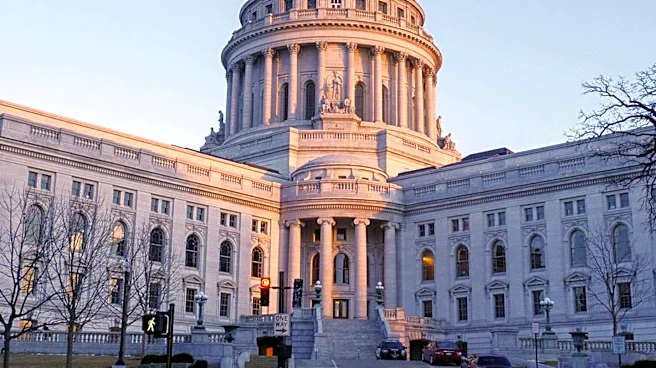
Elon Musk, the CEO of Tesla and SpaceX, will not face criminal charges in Wisconsin regarding allegations of election bribery during the 2025 Wisconsin Supreme Court election. La Crosse County District Attorney Tim Gruenke, appointed as a special prosecutor,
stated in an August 25 letter that he did not believe a jury would convict Musk. The Wisconsin Elections Commission had previously found probable cause that Musk's social media posts, which offered chances at $1 million checks to voters, likely violated state election bribery laws. Musk's initial post in March 2025 announced an event where entrance was limited to those who had voted in the Supreme Court Election, with $1 million checks given in appreciation for voting. He later clarified that entrance was for those who signed a petition against 'activist judges' and the checks would go to spokespersons for the petition. Gruenke concluded that nothing of value was ultimately given to individuals for voting, and the initial statement was a 'poorly worded statement that was corrected and brought into compliance with the law.' Musk still faces a civil lawsuit in Brown County Circuit Court concerning these bribery allegations.
Why It's Important?
This decision is significant for several reasons, particularly concerning the interpretation and enforcement of election laws in the U.S. It highlights the challenges in prosecuting cases involving public statements and subsequent clarifications, especially when no direct exchange of value for a vote can be proven. The Wisconsin Elections Commission's finding of probable cause, contrasted with the special prosecutor's decision not to pursue criminal charges, underscores potential ambiguities in existing statutes or differing interpretations among legal authorities. This outcome could influence how public figures engage with voters and political campaigns, potentially setting a precedent for what constitutes an illegal inducement versus a permissible form of engagement. For Wisconsin, a state with a history of closely contested elections, the integrity of its electoral process is paramount, and this case raises questions about the effectiveness of current laws in preventing perceived undue influence, particularly from wealthy individuals. The ongoing civil lawsuit indicates that the legal scrutiny of Musk's actions is not entirely concluded, suggesting continued debate over the ethical and legal boundaries of campaign involvement.
What's Next?
While criminal charges have been dismissed, Elon Musk still faces a civil lawsuit in Brown County Circuit Court brought by the Wisconsin Democracy Campaign regarding the bribery allegations. This civil case will likely continue to explore whether Musk's actions constituted an attempt to influence the election unlawfully, even if not criminally. The outcome of this civil suit could still result in financial penalties or other legal repercussions for Musk. Furthermore, the differing opinions between the Wisconsin Elections Commission and the special prosecutor may prompt renewed discussions among Wisconsin lawmakers about strengthening or clarifying the state's election bribery laws. Democratic state lawmakers had previously proposed legislation to expand these laws to include payments for petition-signing, which did not pass. This case could reignite efforts to revise election statutes to address modern forms of campaign engagement and potential influence, especially given the increasing role of social media and high-net-worth individuals in political discourse. The broader implications for campaign finance and election integrity across the U.S. will also be closely watched.
Beyond the Headlines
This case delves into the complex intersection of free speech, campaign finance, and election integrity in the digital age. The initial social media posts by Elon Musk, offering financial incentives tied to voting or political action, sparked a debate about the line between encouraging civic participation and illegal bribery. The prosecutor's decision, based on the lack of direct exchange for a vote and subsequent clarification, highlights the difficulty of applying traditional legal frameworks to rapidly evolving online interactions. This situation also underscores the power and influence of billionaires in shaping public discourse and political outcomes, raising ethical questions about the potential for disproportionate influence in democratic processes. The case could contribute to a broader re-evaluation of how election laws are designed and enforced to maintain fairness and prevent undue influence, particularly as digital platforms become central to political campaigning. It also brings to light the ongoing tension between protecting free expression and safeguarding the integrity of elections from perceived or actual manipulation.