



What's Happening?
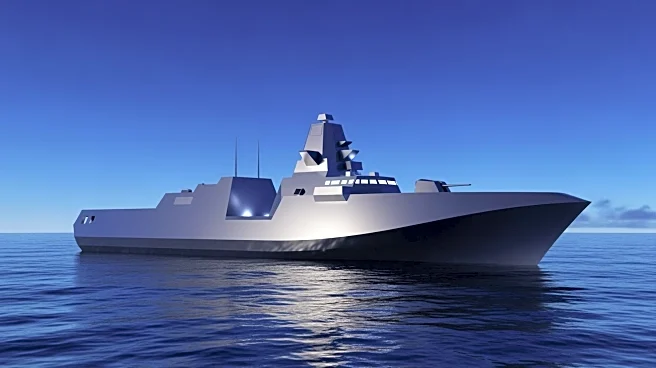
The Spanish shipbuilder Navantia and the Italian shipbuilding group Fincantieri have signed a Memorandum of Understanding (MoU) to jointly manage and execute the European Patrol Corvette (EPC) project. This initiative is part of the PESCO framework, a significant
European defense initiative supported by the European Defence Fund (EDF). The project aims to design and develop a modular, multipurpose, and interoperable corvette-type vessel. The EPC project is led by Italy, Spain, France, and Greece, involving 46 companies from 12 countries. The current phase, approved by the EDF in 2021, focuses on achieving a certified design and building prototype platforms for two versions: a combat ship and a patrol vessel. The collaboration between Navantia and Fincantieri will focus on the design of the combat version and explore opportunities to export it to other European partners.
Why It's Important?
This collaboration between Navantia and Fincantieri is crucial for enhancing Europe's defense capabilities. By working together, these companies aim to create a new class of multipurpose, innovative, and cybersecure corvettes that meet the requirements of various European navies. The project embodies the spirit of European cooperation and technological excellence, potentially setting a new standard in European maritime defense. The joint venture is expected to strengthen the operational capabilities of Europe as a whole, providing a strategic platform for interoperability, innovation, and security. This initiative not only addresses the needs of the Spanish and Italian navies but also lays the groundwork for broader European defense collaboration.
What's Next?
The next steps for the EPC project involve the continuation of the design and prototyping phases, with the EDF having allocated additional funding for these efforts. The joint venture between Navantia and Fincantieri will be open to participation from other project partners, which could further enhance the project's scope and impact. As the project progresses, it is likely to attract interest from other European countries looking to bolster their naval capabilities. The successful execution of this project could lead to increased collaboration among European defense industries and potentially influence future defense policies and strategies within the European Union.