







What's Happening?
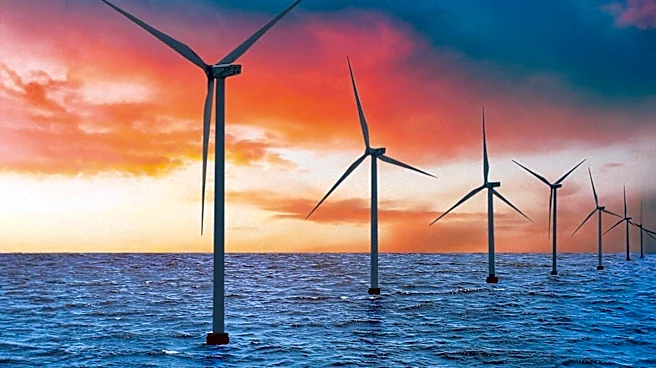
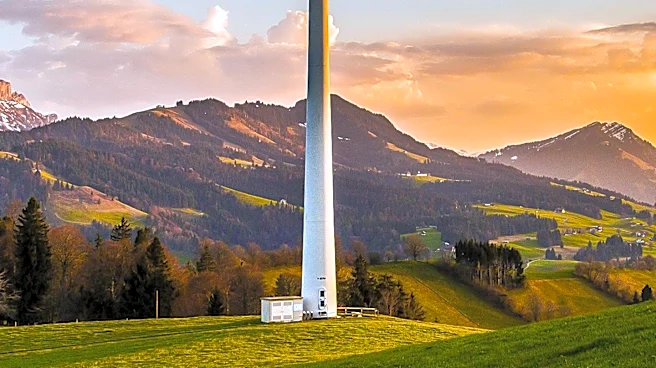
Norway is expediting the development of onshore wind farms and electricity grids to meet increasing power demands. The government, led by the Labour Party, has introduced plans to cut grid development times by simplifying permitting processes and removing
bureaucratic barriers. This move comes as the country faces pressure from industrial electrification and data center demands, which are tightening Norway's power balance. Despite generating most of its electricity from renewable sources, Norway has only added about 1,000 MW of new capacity since 2021 due to local and Indigenous Sami opposition. The government aims to incentivize local communities by proposing payments from wind developers based on planned electricity production.
Why It's Important?
The acceleration of wind and grid development is crucial for Norway to maintain its position as a leader in renewable energy and to support its industrial growth. The reforms are expected to boost employment and protect existing jobs and companies by ensuring a stable power supply. However, the challenge lies in balancing rapid development with local and Indigenous rights, as opposition has previously stalled progress. The success of these initiatives could serve as a model for other countries facing similar energy transition challenges, highlighting the importance of integrating community incentives and streamlined regulatory processes.
What's Next?
Norway's government will need to navigate local opposition carefully to ensure the success of its wind and grid expansion plans. The proposed financial incentives for host communities could play a significant role in gaining local support. Additionally, the government must address grid capacity constraints to prevent bottlenecks that could hinder industrial projects. As Norway moves forward, the outcomes of these initiatives will be closely watched by other nations looking to enhance their renewable energy infrastructure.
Beyond the Headlines
The push for faster development of renewable energy infrastructure in Norway underscores a broader trend in Europe towards decarbonization and energy independence. The country's approach to integrating local financial incentives and simplifying regulatory processes could influence future energy policies across the continent. Moreover, the focus on renewable energy highlights the growing importance of sustainable practices in maintaining economic competitiveness and addressing climate change.