



What's Happening?
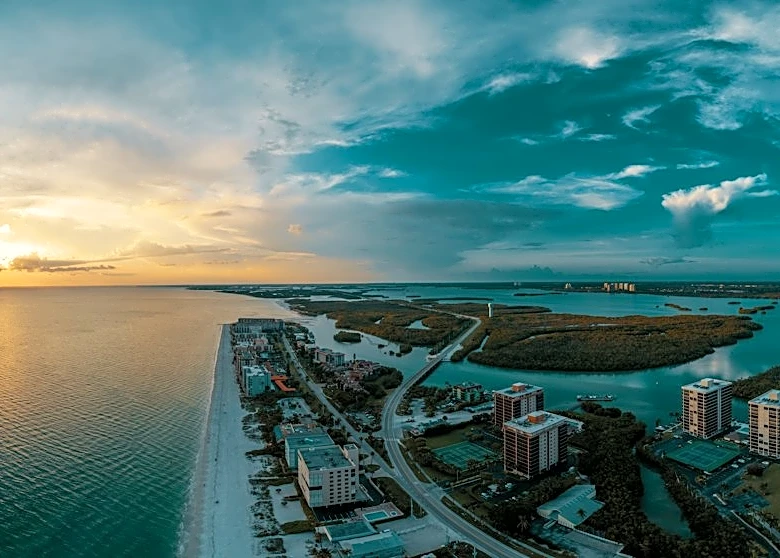
The United States is experiencing a range of weather conditions, with Florida facing a prominent threat of heavy rainfall and flash flooding. According to NOAA's Weather Prediction Center (WPC), persistent Atlantic moisture and an upper-level low-pressure
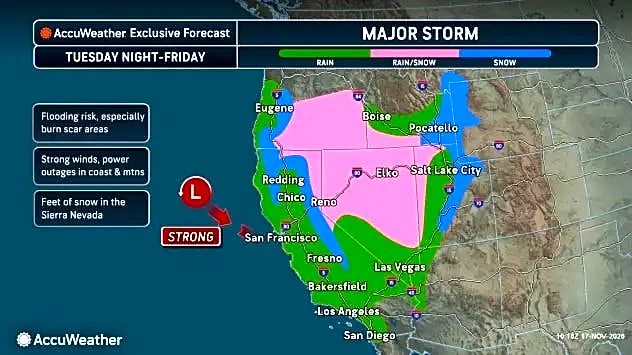
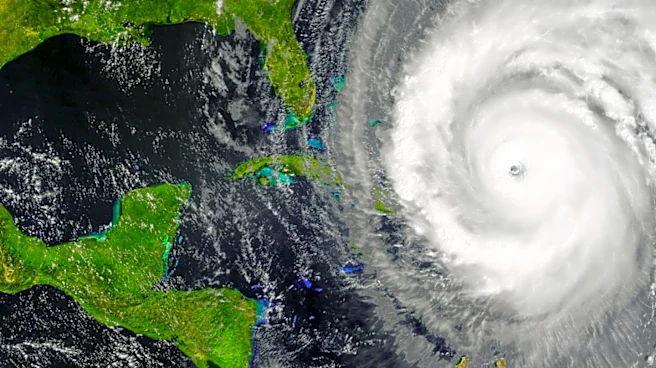
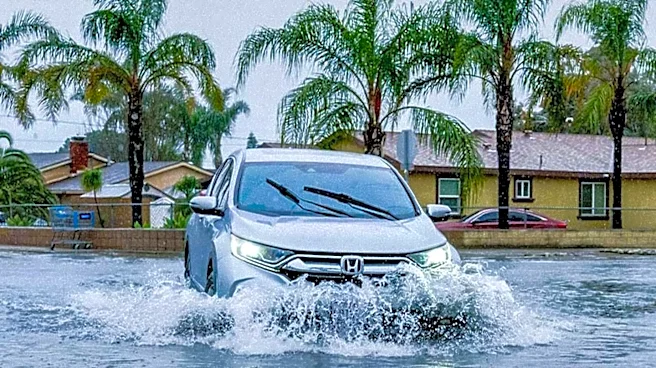
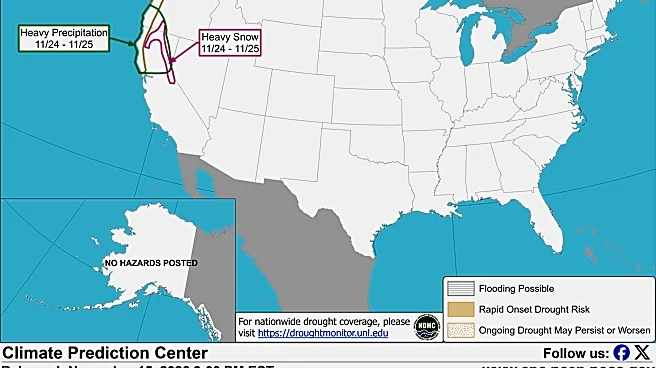
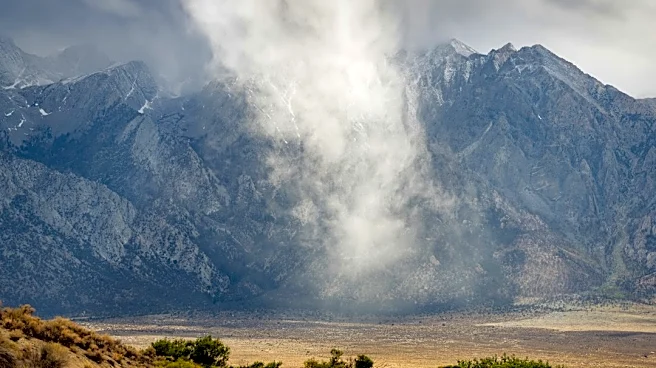
system are causing widespread showers and thunderstorms across eastern Florida. A Moderate Risk of excessive rainfall has been identified for parts of the Space Coast and Treasure Coast, with a broader Slight Risk extending across much of eastern Florida. Communities such as Melbourne and Titusville are advised to monitor local flood information closely, as repeated thunderstorms could lead to flash flooding, particularly in urban areas and locations with poor drainage. This unsettled weather pattern is expected to continue into Thursday. Meanwhile, California is bracing for a major Pacific storm system bringing widespread precipitation and substantial snowfall to the Sierra Nevada. Other regions, including the Midwest, are experiencing different conditions; Chicago, for instance, is forecast to have increasing cloud cover and temperatures near 60°F.
Why It's Important?
The severe weather conditions across the U.S. highlight significant risks to public safety, infrastructure, and local economies. In Florida, the potential for flash flooding poses immediate dangers to residents, property, and transportation, potentially disrupting daily life and commerce in affected coastal areas. Businesses in these regions could face closures, damage, and financial losses. The heavy rainfall in California, coupled with significant snowfall in the Sierra Nevada, presents challenges for travel and could impact water resources and agricultural sectors. The contrasting weather patterns across the country underscore the diverse climate challenges facing different U.S. regions, necessitating varied preparedness and response strategies. The National Weather Service (NWS) and the National Oceanic and Atmospheric Administration (NOAA) are crucial in providing timely warnings, which are vital for mitigating potential harm and enabling communities to prepare effectively for these weather events.
What's Next?
Residents in eastern Florida should continue to monitor local flood information closely, as the unsettled weather pattern with a risk of flash flooding is expected to persist into Thursday. Travelers across the western states, particularly in mountainous areas like the Sierra Nevada, are advised to check local road conditions and weather advisories due to heavy precipitation and significant snow accumulation. The National Weather Service remains the primary source for location-specific forecasts, active warnings, and updated information for all 50 states. The ongoing weather events will likely prompt continued emergency response efforts and public awareness campaigns in affected regions. The varying conditions across the U.S. suggest that different states will need to maintain vigilance and adapt to their specific weather challenges in the coming days.
Beyond the Headlines
The diverse and extreme weather events occurring simultaneously across the United States, from Florida's flood risk to California's atmospheric river and the Midwest's milder temperatures, underscore the increasing complexity of weather patterns. This situation highlights the broader implications of climate variability and the need for robust, localized weather forecasting and emergency preparedness systems. The economic impact of such events can be substantial, affecting insurance markets, agricultural yields, and tourism. Furthermore, the strain on emergency services and infrastructure in multiple regions simultaneously could reveal vulnerabilities in national disaster response capabilities. The ongoing need for accurate and timely information from agencies like the NWS and NOAA becomes paramount in a landscape of increasingly unpredictable and severe weather phenomena, influencing long-term urban planning and resource management strategies.