






What's Happening?
The South Dakota Second Century Habitat Fund (SCHF) has been awarded $7,979,420 through the U.S. Department of Agriculture’s Regional Conservation Partnership Program (RCPP). This funding will support the SCHF's Working Lands Grassland Recovery Initiative,
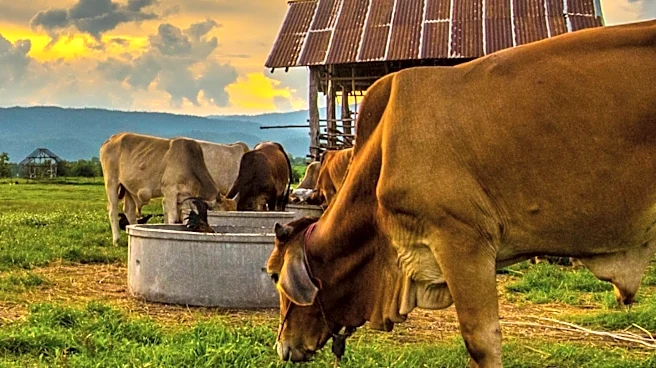
a statewide effort aimed at restoring grasslands, strengthening agricultural operations, and sustaining South Dakota’s outdoor heritage. The initiative, administered by USDA’s Natural Resources Conservation Service (NRCS), plans to convert 7,500 acres of marginal cropland into diverse perennial grasslands through voluntary 10-year agreements. These enrolled acres will remain productive for managed haying and grazing, providing benefits for both wildlife habitat and livestock producers. Elysabeth Kierl, executive director of SCHF, emphasized that healthy grasslands offer nesting cover for birds and forage for cattle, giving producers more flexibility to retain or rebuild their herds.
Why It's Important?
This significant investment in grassland restoration is crucial for South Dakota's agricultural sector and its natural ecosystems. By converting marginal cropland to perennial grass, the initiative aims to reduce soil erosion, improve soil function, enhance water infiltration, and connect fragmented wildlife habitats. These benefits are vital for the long-term health of both agricultural operations and the surrounding landscapes. For livestock producers, the program offers a practical way to establish more productive grassland acres, which is essential for herd management and rebuilding efforts, especially during periods of low cattle inventory. The initiative also fosters a collaborative approach between conservation and agriculture, demonstrating how environmental stewardship can directly support economic viability for farmers and ranchers. This model could serve as a blueprint for other states facing similar challenges in balancing agricultural productivity with ecological preservation.
What's Next?
The SCHF is currently finalizing the grant implementation steps. Eligible landowners and agricultural producers across South Dakota will soon be able to participate in the initiative. The program will offer annual rental payments during the initial years of the 10-year agreement, along with support for seedbed preparation, seed, and planting. Participation is voluntary, and the land remains privately owned, with enrolled acres available for managed haying and grazing. Applications will undergo an eligibility review and a competitive ranking process, considering factors such as site suitability, restoration benefits, and opportunities to expand or connect existing grasslands. Interested producers are encouraged to visit sdhabitatfund.com for more information on how to participate and how the initiative can support their operations.
Beyond the Headlines
This initiative represents a strategic shift towards integrating conservation practices directly into agricultural business models. By demonstrating that 'what’s good for the bird is good for the herd,' the program challenges the traditional dichotomy between environmental protection and agricultural production. It highlights the economic value of ecological services, such as improved soil health and water quality, which directly benefit farming operations. Furthermore, the focus on voluntary, long-term agreements respects private land ownership while encouraging sustainable land management. This approach could lead to broader adoption of similar programs nationwide, fostering a more resilient agricultural landscape that is better equipped to handle environmental challenges like drought and climate change, while also supporting biodiversity and local economies.