


What's Happening?
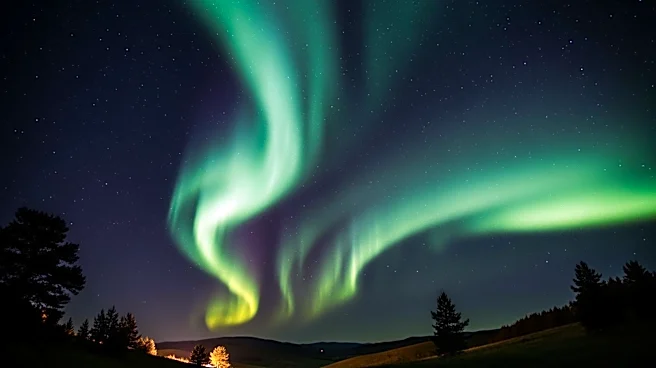
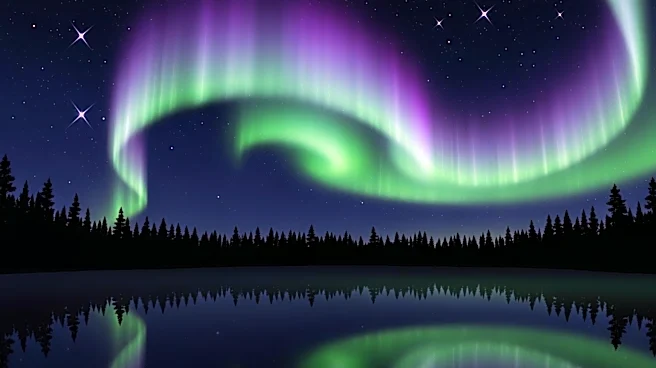
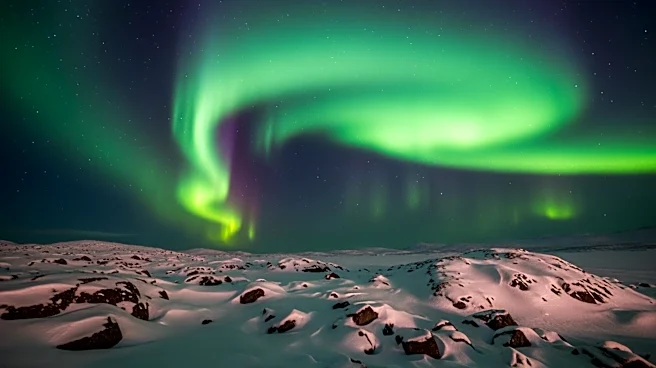
Aurora expert Tom Kerss captured a rare and powerful display of pulsating northern lights over Arctic Norway. The display, which lasted nearly three hours, was recorded during a geomagnetic storm in February 2026. Pulsating auroras are typically associated
with auroral substorms and are not uncommon, but the duration and intensity of this display were unusual. Kerss used a Sony A7S camera to capture the event, which featured visible pulses and shifting colors, providing valuable scientific insight into auroral phenomena.
Why It's Important?
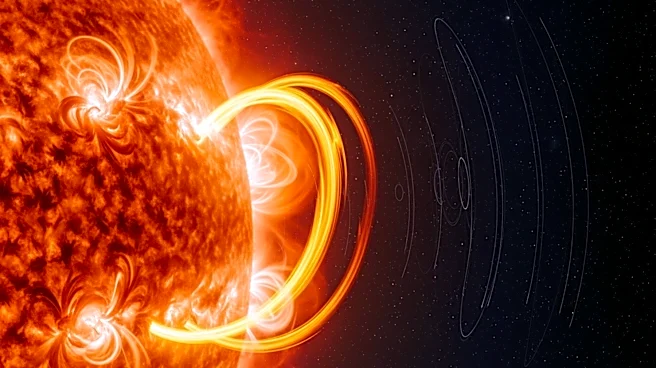
The capture of such a rare and extended auroral display offers a unique opportunity for scientific study and public engagement. Understanding the mechanisms behind pulsating auroras can enhance our knowledge of space weather and its effects on Earth's atmosphere. The footage provides a detailed record of the event, contributing to ongoing research in auroral science and offering insights into the dynamic interactions between solar activity and Earth's magnetic field.
What's Next?
Researchers may analyze the footage to study the underlying processes driving pulsating auroras and their impact on Earth's atmosphere. The event highlights the importance of continued observation and documentation of auroral phenomena. Future studies may focus on the role of chorus waves and other space weather factors in producing such displays. The findings could inform models of space weather prediction and improve our understanding of the interactions between solar and terrestrial systems.