






What's Happening?
The Tulare Fire Department is actively planning for the future to ensure reliable fire and emergency services as the city continues to expand. The department has successfully secured over $7.5 million in federal, state, and local grant funding in the past
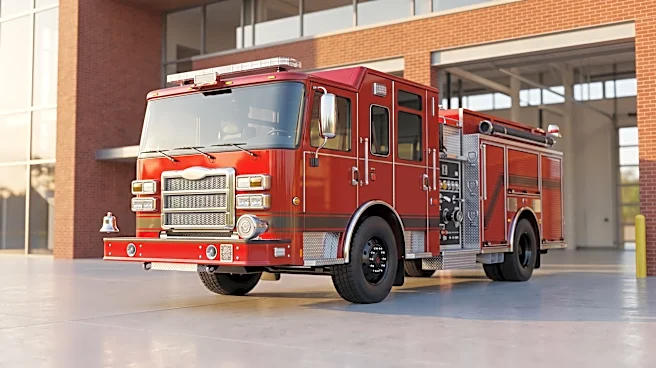
three years, which has been used to acquire critical equipment such as cardiac monitors, a ladder truck, and a fire engine. Additionally, a three-year Staffing for Adequate Fire and Emergency Response (SAFER) grant is funding 12 firefighter positions through March 2028. Despite these successes, the department emphasizes the need for sustainable, long-term local investment. The city is facing financial pressures due to inflation, rising pension costs, increasing state mandates, and the expense of modern equipment, leading to a structural deficit where service costs are growing faster than revenue. Key future plans include building Fire Station 64 on the east side of the city, ordering three new fire apparatus, and developing long-term staffing strategies.
Why It's Important?
This situation highlights a critical challenge faced by growing communities across the U.S.: balancing urban expansion with the sustained funding of essential public safety services. The reliance on temporary grant funding, while beneficial in the short term, underscores the vulnerability of fire departments to fluctuating external support. A structural deficit in city finances means that without new revenue streams, the quality and responsiveness of emergency services could be compromised. This directly impacts the safety and well-being of residents and businesses, potentially leading to slower response times and increased risks. The proactive planning by the Tulare Fire Department to address these issues is vital for maintaining public trust and ensuring that the city's infrastructure, including emergency response capabilities, keeps pace with its development. The outcome in Tulare could serve as a case study for other U.S. cities grappling with similar growth-related financial strains on their public services.
What's Next?
The Tulare Fire Department is focused on identifying a stable funding source for its long-term needs. The city has already acquired property for Fire Station 64, and the project is ready to move into the design phase once funding is secured. The department is exploring various funding avenues, including the city’s own reserves and additional state and federal grants. However, there is an acknowledgment that reserve funds need to be replenished for future emergencies, and grant availability is not consistently sufficient. An increase in sales tax revenue is being considered as a potential solution to meet these infrastructure needs without depleting reserves or waiting for state action. The department will continue to advocate for these investments, which are based on recommendations from its 2023 Community Risk Assessment and Standards of Coverage study, to ensure fast and effective emergency response for the growing community.
Beyond the Headlines
The challenges faced by the Tulare Fire Department reflect a broader national trend where local governments struggle to fund essential services amidst economic pressures and population growth. The reliance on grants, while providing immediate relief, often defers the fundamental issue of sustainable local revenue generation. This situation raises questions about the long-term fiscal health of municipalities and their ability to provide consistent public safety. It also underscores the ethical imperative for communities to invest proactively in public safety rather than reacting to crises. The discussion around sales tax increases or other local funding mechanisms often involves complex political and social considerations, highlighting the tension between public demand for services and taxpayer willingness to fund them. The outcome in Tulare could influence how other U.S. cities approach funding critical emergency services in an era of increasing demands and constrained budgets.