



What's Happening?
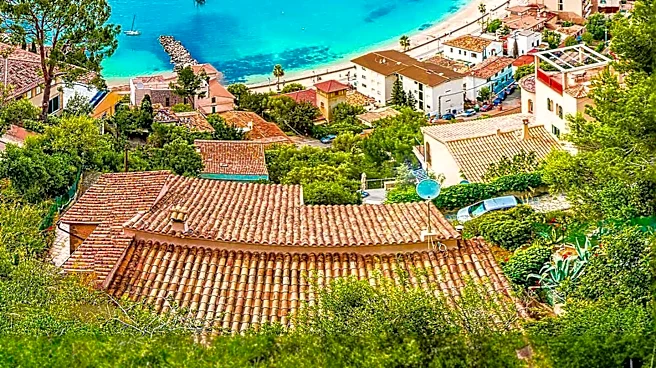
Environmental organizations in Mallorca, including GOB and Terraferida, have voiced significant disappointment following a meeting with Balearic Government ministers regarding overtourism, housing, quality of life, and limits to growth. Representatives
Joan Moranta, Tonina Siquier, and Maria Orts stated that the government is not implementing effective measures to address the core problems of overtourism. They argue that current laws are counterproductive, leading to increased traffic congestion and reduced access to beaches for residents. The environmentalists highlighted that despite government claims of containment, growth continues, exceeding all limits, as evidenced by a rising Human Pressure Index, deteriorating aquifers, and increased waste generation. They advocate for a reduction in growth and a change in the tourism model, including restrictions on foreign home ownership, rather than merely managing saturation.
Why It's Important?
The ongoing dispute in Mallorca over tourism management underscores a critical challenge faced by many popular destinations globally, including those in the U.S., where the economic benefits of tourism often clash with environmental and social sustainability. The environmentalists' concerns about housing shortages, infrastructure strain, and declining quality of life for residents are issues that resonate in U.S. tourist hotspots. The debate highlights the need for a balanced approach that considers the long-term liveability of destinations alongside economic gains. If unchecked, overtourism can lead to significant environmental degradation, increased cost of living, and a diminished authentic experience for both residents and visitors, potentially harming the very appeal that draws tourists in the first place. The call for restricting foreign home ownership also touches upon broader discussions about housing affordability and local control in desirable areas.
What's Next?
The environmental groups presented President Prohens with 1,050 documents containing proposed measures for the future of the Balearic Islands, reflecting public weariness with the current situation. However, the government has indicated it will not declare the Balearic Islands a stressed residential area and appears disinclined to impose strict limits on growth, instead focusing on managing saturation through measures like desalination plants for water deficits and additional cables from the mainland for energy. This suggests a continued divergence in approach between environmental advocates pushing for fundamental changes and the government favoring infrastructural solutions. Future actions will likely involve ongoing public pressure from environmental groups and residents, potentially leading to further demonstrations, while the government continues to implement its current strategy, which environmentalists believe will exacerbate existing problems.
Beyond the Headlines
The conflict in Mallorca reveals a deeper philosophical divide regarding economic development and environmental stewardship. The environmentalists' emphasis on 'ecological limits' and 'quality of life' for residents challenges the traditional growth-oriented tourism model. This situation reflects a global trend where communities are increasingly questioning the true cost of unchecked tourism, moving beyond simple visitor numbers to consider the cumulative impact on local ecosystems, social fabric, and cultural heritage. The investment in infrastructure like new ring roads, desalination plants, and energy cables, while addressing immediate symptoms, may perpetuate a model that environmentalists argue is unsustainable in the long run. This debate could influence policy discussions in other regions grappling with similar issues, prompting a re-evaluation of what constitutes 'value' in tourism beyond mere economic indicators.