






What's Happening?
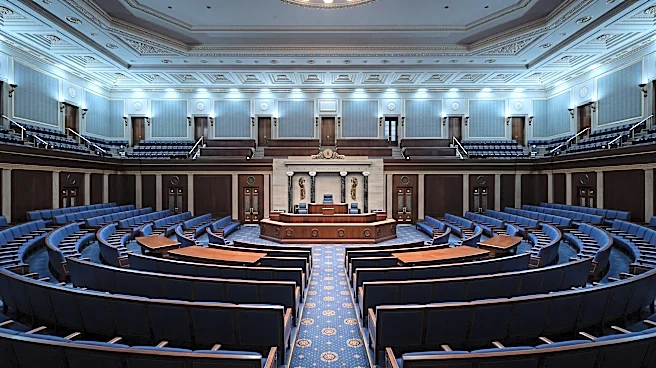
House Democratic leadership has publicly criticized Representatives Jared Golden (D-Maine) and Marie Gluesenkamp Perez (D-Wash.) for voting with Republicans on a key procedural rule. This vote, which passed 210-208, allowed the GOP to advance its agenda
for the week after facing internal defections. Bipartisan votes on procedural rules are highly unusual in the House. The Democratic leadership issued a joint statement calling the action a "significant breach of trust" and has requested the Committee on Caucus Rules to address the matter. This defection forced Democrats to take a difficult vote on a resolution denouncing socialism, which 192 of them opposed. Both Golden and Gluesenkamp Perez indicated their vote was motivated by the Northeast Lobsterman Protection Act, a bill included in the bundle of legislation unlocked by the rule, which delays new fishing regulations aimed at protecting whales until 2035. Golden emphasized the potential loss of 18,000 jobs in Maine if the bill did not pass, while Gluesenkamp Perez criticized the "DC bubble" for not understanding the needs of working people in waterfront areas.
Why It's Important?
This incident highlights significant internal divisions within the Democratic Party and challenges House Minority Leader Hakeem Jeffries' ability to maintain party unity. Former House Speaker Nancy Pelosi noted that such defections on procedural votes were unprecedented during her tenure, suggesting a potential shift in party discipline. The willingness of some Democrats to cross party lines, particularly on issues with strong local economic implications like the lobsterman protection act, could set a precedent for future votes and complicate the Democratic leadership's efforts to control the legislative agenda. The outcome of the Committee on Caucus Rules' review could impact the careers of the involved representatives, especially Gluesenkamp Perez, who is running for re-election in a competitive district. This event also underscores the tension between environmental protection efforts and economic concerns in specific industries, demonstrating how local issues can influence national legislative processes and party cohesion.
What's Next?
The Committee on Caucus Rules is expected to review the actions of Representatives Golden and Gluesenkamp Perez and determine a "serious response." Potential consequences floated by some Democrats include removing the two representatives from their committee assignments for the remainder of the year. The outcome of this internal party disciplinary action will be closely watched, particularly as it could influence future instances of bipartisan cooperation or defection. Representative Gluesenkamp Perez's re-election campaign in a competitive district may be significantly impacted by the party's response. The broader implications for House Minority Leader Hakeem Jeffries' leadership and his ability to unify the Democratic caucus will also unfold, especially as the party looks towards future elections and potential control of the House.
Beyond the Headlines
The defection of Representatives Golden and Gluesenkamp Perez reveals a deeper tension between party loyalty and constituent representation, particularly for members in swing districts or those representing specific regional economic interests. While party discipline is crucial for legislative effectiveness, the incident also highlights the pressure lawmakers face to prioritize the immediate economic well-being of their constituents, even if it means defying party leadership. This dynamic can lead to a more fragmented legislative process, where individual members' votes are increasingly influenced by local concerns rather than a unified party platform. The emphasis on the Northeast Lobsterman Protection Act underscores the ongoing challenge of balancing environmental regulations with the livelihoods of specific industries, a conflict that often plays out at the intersection of national policy and local economies. This event could signal a growing trend of members prioritizing local issues over strict party adherence, potentially leading to more unpredictable legislative outcomes in the future.