


What's Happening?
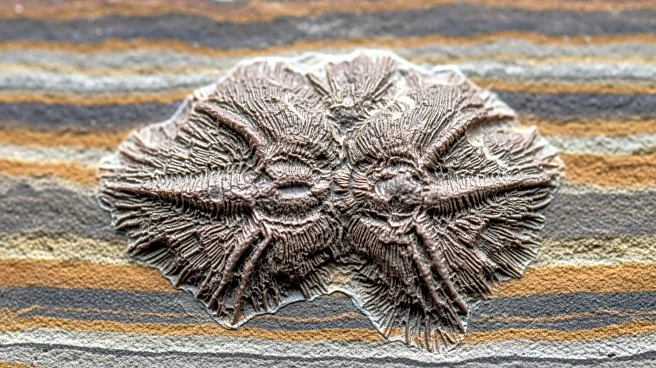
A research team led by Elizabeth Bailey, an assistant professor at UT San Antonio, has identified chitin in trilobite fossils over 500 million years old. This discovery marks the first confirmed detection of chitin, a primary organic component found in modern
crab shells and insect exoskeletons, in this extinct group. The study, published in the journal Palaios, provides new insights into fossil preservation and the Earth's long-term carbon cycle. Chitin, previously thought to degrade quickly after an organism's death, is now shown to persist in the geologic record far longer than assumed. This finding has significant implications for understanding how organic carbon is stored in Earth's crust over geological time.
Why It's Important?
The discovery of chitin in ancient fossils challenges previous assumptions about the longevity of biological polymers in the geologic record. This has broader implications for understanding the Earth's carbon cycle, as it suggests that organic carbon can persist in common geological settings. The research highlights the role of chitin in long-term carbon sequestration, which is relevant to discussions on Earth's carbon dioxide levels and climate change. The study also underscores the importance of interdisciplinary research, combining geochemical and planetary science perspectives to explore how biological materials interact with Earth's carbon cycle over billions of years.
What's Next?
The findings from this study are expected to open new research opportunities at UT San Antonio's Early Earth Lab, focusing on the long-term survival of organic molecules in geological materials. This could lead to further studies on how organic carbon is stored naturally within the planet's crust, potentially informing climate change models and carbon sequestration strategies. The research may also inspire future student-driven projects, contributing to a deeper understanding of Earth's carbon cycle and its implications for modern climate discussions.