




What's Happening?
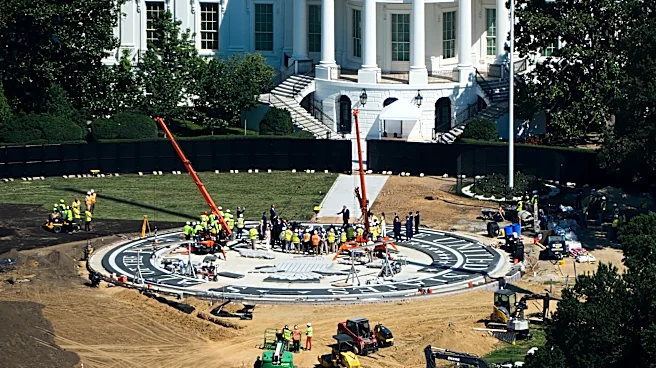
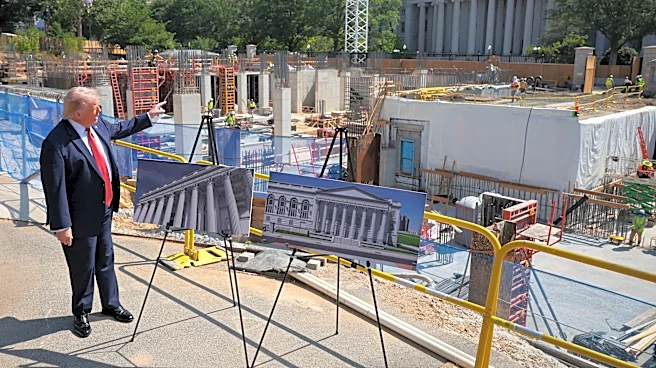
President Donald Trump provided an impromptu tour of ongoing construction projects at the White House, highlighting the replacement of the White House driveway and progress on a new helipad. During the tour, President Trump emphasized his personal involvement
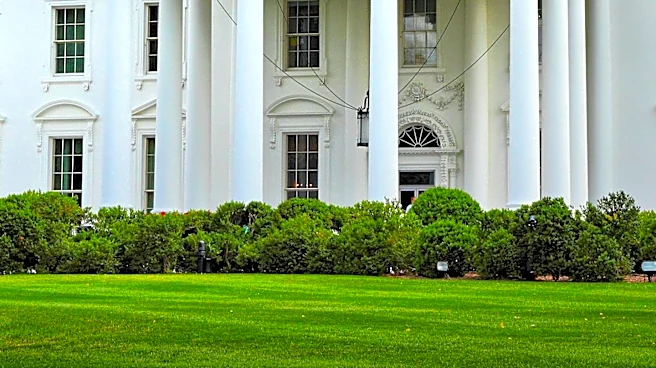
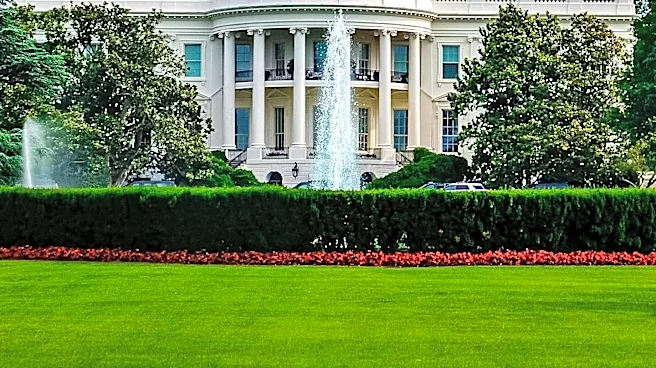
in the details of these projects, such as the choice of California-mined white granite for the driveway, which he described as a 'very special stone.' He also revealed that he had intervened in the helipad's construction, requesting that its slope be made 'dead flat' after initially deeming it too steep. The President signed a carved image of an eagle that will be incorporated into the presidential seal on the new granite helipad. Additionally, he drew attention to updates on the White House facade, where paint had been stripped and redone. These projects, particularly the helipad and the previously unannounced completion of the driveway, underscore President Trump's focus on construction as a significant part of his presidential legacy.
Why It's Important?
President Trump's direct involvement and public showcasing of White House construction projects highlight his personal investment in the physical infrastructure of the presidency and the symbolic representation of the White House. This emphasis on tangible improvements and aesthetic details reflects a broader theme in his public persona, where construction and development are often linked to progress and legacy. The projects, such as the new helipad and driveway, are not merely functional upgrades but are presented as enhancements to the prestige and operational efficiency of the presidential residence. His comparison of the helipad's restoration to his work on the Wollman Rink in Central Park further illustrates his view of these projects as significant achievements. This focus also provides insight into the President's priorities, suggesting that the physical environment of the White House is seen as an extension of national pride and a reflection of his administration's commitment to excellence.
What's Next?
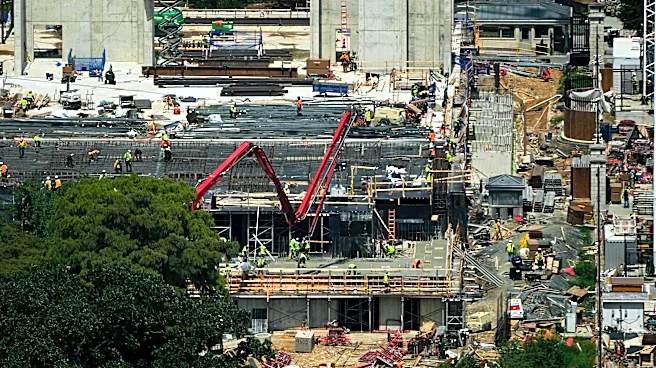
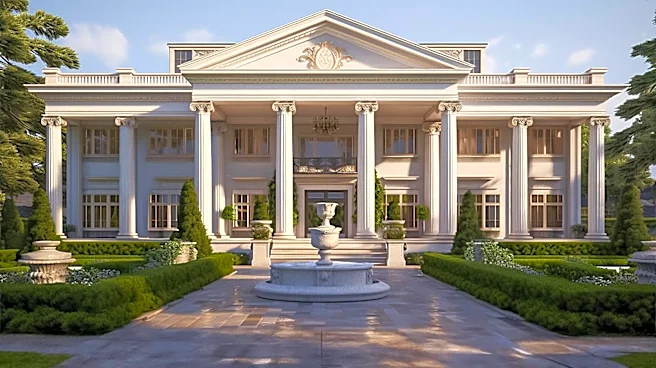
Construction on the White House ballroom, which President Trump frequently mentions and refers to as the 'military complex,' is progressing rapidly, with a 250-person crew working extended hours. A court filing indicates the complex is 65% complete. The administration has taken this project to the Supreme Court, arguing its national security importance, and President Trump has expressed confidence that the court will not rule against him. The completion of these various construction endeavors will likely continue to be a point of emphasis for President Trump, potentially serving as a backdrop for future events and state visits. He has already outlined a vision for how the new helipad and ballroom will be utilized for dignitaries, suggesting a more streamlined and impressive experience for international guests. The ongoing legal proceedings regarding the ballroom's construction will determine its ultimate fate, but President Trump's current stance indicates an expectation of continued progress.
Beyond the Headlines
President Trump's consistent focus on construction projects at the White House, including the helipad and the ballroom, delves deeper than mere infrastructure upgrades; it reflects a profound connection to his personal and political identity. His background as a real estate developer and his frequent use of construction metaphors in his rhetoric suggest that these physical transformations are integral to how he perceives and projects his legacy. The meticulous attention to details like the 'dead flat' helipad and the 'very special stone' for the driveway indicates a desire for perfection and control over his environment, mirroring his approach to governance. This emphasis on tangible, visible achievements can be interpreted as a way to solidify his impact and leave a lasting mark on the nation's most iconic residence. The projects also serve as a symbolic assertion of power and permanence, reinforcing the image of a strong and decisive leader who is actively shaping the physical and political landscape.