

What's Happening?
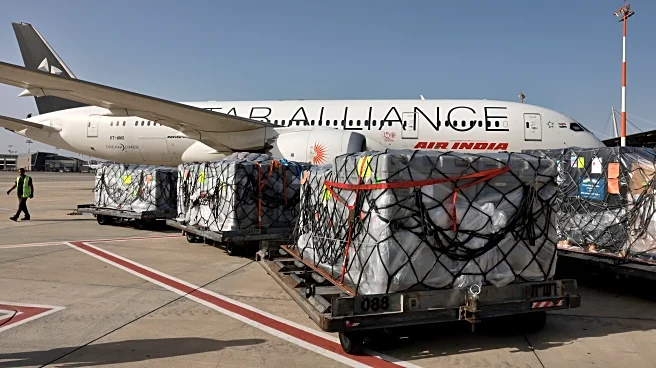
The ongoing conflict involving the U.S., Israel, and Iran has led to significant travel disruptions in the Middle East. Airspace over several countries, including the United Arab Emirates, Qatar, and Israel, has been closed, resulting in the cancellation
of thousands of flights. Major airlines such as Emirates, Etihad, and Qatar Airways have suspended operations, leaving many travelers stranded. The Australian government has issued 'do not travel' advisories for several Middle Eastern countries and is urging Australians to reconsider travel to others. The U.S. has advised its citizens to shelter in place and avoid travel to the region. The timeline for when travel will resume remains uncertain as airlines continue to assess the situation and reposition their aircraft.
Why It's Important?
The travel disruptions have significant implications for global travel and the airline industry. With major hubs like Qatar, Dubai, and Abu Dhabi halting operations, the connectivity between Europe, Africa, and Asia is severely affected. This situation not only impacts travelers but also has economic repercussions for airlines and related industries. The uncertainty surrounding the resumption of flights could lead to financial losses and logistical challenges for airlines. Additionally, the safety concerns for travelers and the potential need for government intervention highlight the broader geopolitical tensions and their impact on international travel.
What's Next?
Airlines are closely monitoring the situation and may need to adjust flight paths or schedules based on developments in the conflict. Governments may consider repatriation flights if commercial options remain unavailable. Travelers are advised to stay informed through official channels and be prepared for potential changes in travel plans. The resolution of the conflict and reopening of airspace will be crucial for the resumption of normal travel operations.