
What's Happening?
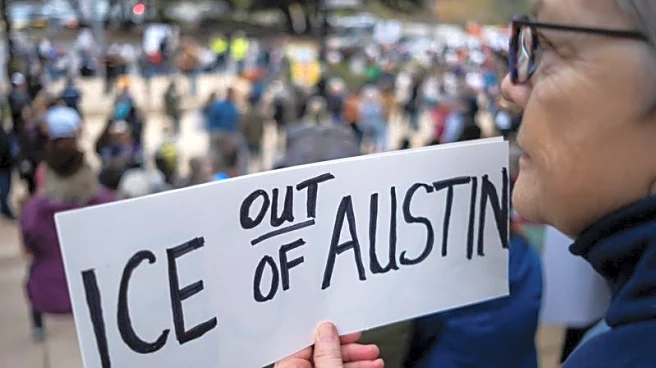
A group of nine protesters in Texas has been found guilty of providing support for terrorism and other charges related to an anti-ICE protest. The case involved allegations that the activists were part of an antifa cell, marking the first time the government
has pursued such charges. The defendants faced a range of accusations, including material support to terrorists, rioting, attempted murder, and firearms charges. The protest took place at the Prairieland detention center, where demonstrators planned a noise demonstration using fireworks. The situation escalated when some protesters vandalized property and one individual, Benjamin Song, shot a police officer. Song and others were convicted on various charges, with Song facing a minimum of 20 years in prison. The case has sparked debate over the use of anti-terrorism laws against protesters and the implications for First Amendment rights.
Why It's Important?
This case is significant as it tests the boundaries of First Amendment rights and the application of anti-terrorism laws to protest activities. The conviction of these protesters could set a precedent for how similar cases are handled in the future, potentially impacting the way protests are organized and perceived in the U.S. The government's approach to prosecuting these individuals as part of an antifa cell raises questions about political motivations and the definition of terrorism. The outcome may influence public policy and legal strategies regarding protest activities, especially those involving controversial groups or ideologies. The case also highlights the ongoing debate over the classification of antifa and the broader implications for civil liberties.
What's Next?
The defendants face sentencing, with potential prison terms ranging from 10 to 60 years. Appeals are likely, as defense attorneys plan to challenge the verdict based on First Amendment grounds and the sufficiency of evidence. The case may continue to attract attention from civil rights groups and legal experts, who are concerned about the implications for protest rights and government overreach. The broader political and social discourse around antifa and protest activities may evolve as stakeholders react to the verdict and its consequences.
Beyond the Headlines
The trial has exposed deeper issues related to political persecution and ideological bias in legal proceedings. The use of antifa as a label in the case, despite its lack of legal relevance, suggests a potential misuse of power to target specific beliefs. This raises ethical concerns about the fairness of the judicial process and the potential chilling effect on political activism. The case also underscores the tension between national security interests and individual freedoms, prompting discussions about the balance between safety and civil liberties.