




What's Happening?
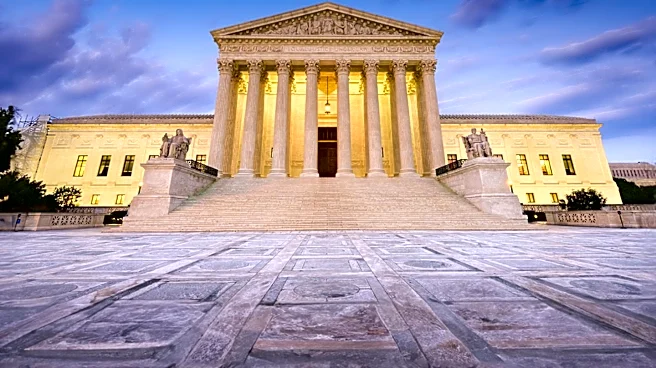
Congress is currently debating various proposals for Supreme Court reform, driven by declining public approval and concerns over the judiciary's political impartiality. Surveys indicate that only 39% of Americans hold a favorable opinion of the Supreme Court,
with 56% believing justices do a fair-to-poor job of keeping politics out of their decisions. Key reform proposals include enforcing a strict ethics code for justices, which enjoys overwhelming support (89%), and implementing fixed terms for justices instead of lifetime appointments, favored by 79%. A more contentious proposal is increasing the number of justices on the court, supported by 53% and opposed by 47%. Historically, Congress has altered the number of justices multiple times, with the current number of nine established in 1869. Some lawmakers, like Sixth District Congressman Ben Cline, oppose these reforms, arguing that the current structure is 'enshrined,' despite historical precedents of changes.
Why It's Important?
The debate over Supreme Court reform is crucial for the integrity and public perception of the U.S. judicial system. The significant decline in public trust, as evidenced by recent surveys, suggests a crisis of legitimacy that could undermine the court's authority and its role as an impartial arbiter of law. Implementing a strict ethics code could enhance transparency and accountability, potentially restoring public confidence by addressing concerns about conflicts of interest and undue influence. Term limits for justices could depoliticize the appointment process, ensuring that each president has an equal opportunity to shape the court's direction and reducing the incentive to appoint younger, ideologically aligned judges for lifetime tenure. Expanding the court, while controversial, could rebalance its ideological composition and address the increased caseload and population growth since the last expansion. The outcome of these debates will profoundly impact the separation of powers, the future of judicial review, and the long-term stability of American democratic institutions.
What's Next?
The discussion around Supreme Court reform is expected to intensify, with various legislative proposals likely to be introduced or revisited in Congress. Proponents of reform will continue to push for measures such as a strict ethics code and term limits, citing strong public support. The more contentious issue of court expansion will likely face significant political hurdles, given the divided opinions. Advocacy groups and legal scholars will continue to publish research and engage in public discourse to influence policy decisions. The political climate, particularly future election outcomes, will play a critical role in determining the feasibility of these reforms. A future Congress with a different political composition might be more inclined to enact significant changes. The judiciary itself may also face internal pressure to address ethical concerns, potentially leading to self-imposed reforms or clearer guidelines for judicial conduct.
Beyond the Headlines
The push for Supreme Court reform reflects a deeper societal concern about the politicization of institutions traditionally seen as apolitical. The debate over judicial ethics and term limits goes to the heart of how power is exercised and checked within a democracy. The idea of lifetime appointments, once seen as a safeguard against political pressure, is now viewed by many as contributing to an entrenched ideological divide and a lack of accountability. The historical context of Congress altering the court's size highlights that the judiciary's structure is not immutable, challenging the notion of a 'sacred' nine-justice court. This conversation also touches on the broader health of American democracy, questioning whether institutions are adequately serving the public interest or becoming tools for partisan agendas. The long-term implications could include a fundamental redefinition of judicial independence, a shift in the balance of power among the three branches of government, and a renewed focus on civic education regarding the role of the judiciary.