

What's Happening?
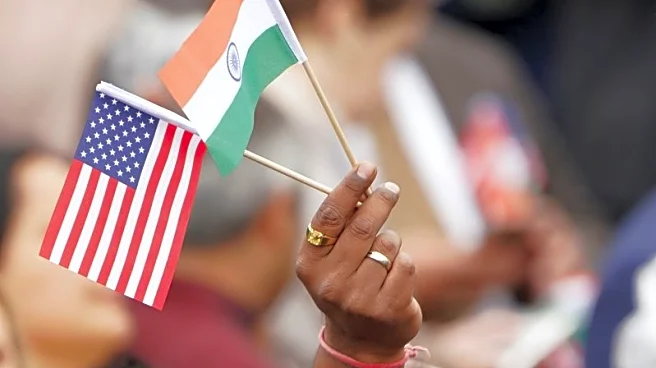
Indian Prime Minister Narendra Modi has embarked on a two-day visit to Israel, marking a significant step in strengthening bilateral relations between the two nations. Upon his arrival at Ben Gurion Airport, Modi was welcomed by Israeli Prime Minister Benjamin
Netanyahu and his wife, Sara. The visit includes a series of high-profile meetings and events, such as an address to the Knesset, a technology exhibition, and a visit to the Yad Vashem Holocaust memorial. Modi's visit is set against a backdrop of regional tensions, particularly concerning Turkey's military support to Pakistan and Bangladesh, which has raised concerns in New Delhi. In response, India is seeking to deepen its ties with Israel and promote the India-Middle East-Europe Economic Corridor (IMEC), aiming to establish a moderate alliance in contrast to a bloc led by Turkey.
Why It's Important?
This visit underscores the growing strategic partnership between India and Israel, which has implications for regional security dynamics. By strengthening ties with Israel, India is positioning itself within a network of moderate countries, potentially countering the influence of Turkey and its allies. This move could shift the balance of power in the region, affecting alliances and economic partnerships. The proposed IMEC corridor is particularly significant as it aims to connect India to Europe through the Middle East, enhancing trade and economic cooperation. This development could also influence U.S. interests in the region, as it aligns with efforts to stabilize and promote moderate governance in the Middle East.
What's Next?
Following Modi's visit, both nations are expected to announce an upgrade in their bilateral strategic ties. The agreements signed during this visit could lead to increased collaboration in areas such as defense, technology, and trade. The establishment of the IMEC corridor will likely be a focal point for future diplomatic and economic initiatives. Additionally, the visit may prompt reactions from other regional players, particularly those aligned with Turkey, potentially leading to shifts in regional alliances and strategies.
Beyond the Headlines
Modi's visit to Israel also highlights the broader geopolitical shifts occurring in the region. The strengthening of India-Israel ties could serve as a model for other nations seeking to balance relations between competing regional powers. This development may also influence India's domestic politics, as it aligns with the country's broader foreign policy goals of enhancing its global standing and economic growth. Furthermore, the visit could have cultural implications, fostering greater people-to-people connections and mutual understanding between the two nations.