




What's Happening?
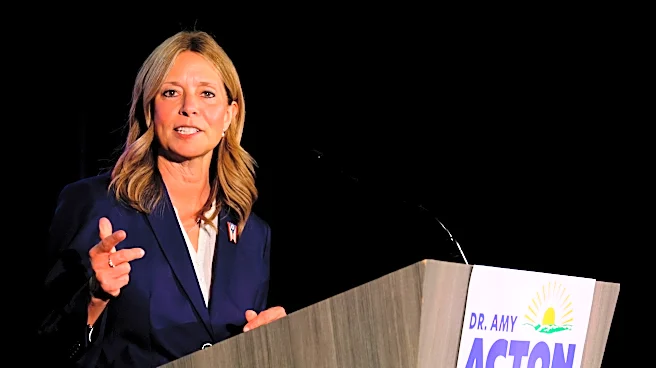
Republican incumbent Zach Nunn and Democratic challenger Sarah Trone Garriott are actively campaigning for Iowa's 3rd Congressional District. The candidates are engaging with voters and discussing critical issues such as healthcare, the economy, tariffs,
and accountability. This competitive race is drawing significant attention as both candidates present their views on how they would represent Iowa in Washington. The election for this district is considered important, with both parties vying for control, and the outcome could influence the balance of power in Congress. The candidates are making their cases to voters, explaining their stances on these key policy areas and why they believe they are the best choice for the district.
Why It's Important?
This congressional race in Iowa's 3rd District is important due to its potential impact on the national political landscape. As a competitive district, the outcome could contribute to the overall control of Congress, affecting the legislative agenda and policy direction of the United States. The issues being debated—healthcare, the economy, tariffs, and accountability—are central to the concerns of many Americans and have broad implications for U.S. industries, public policy, and economic stakeholders. For instance, discussions on tariffs can influence trade relations and agricultural markets, which are particularly relevant in Iowa. The candidates' positions on healthcare could affect access and affordability for constituents, while their economic policies could impact local businesses and employment. The focus on accountability also speaks to broader public demand for transparency and effective governance.
What's Next?
As the election approaches, Zach Nunn and Sarah Trone Garriott will continue their campaigns, likely intensifying their efforts to reach voters across Iowa's 3rd Congressional District. They are expected to participate in more public forums, debates, and community events to articulate their platforms and differentiate themselves from their opponent. The candidates will aim to sway undecided voters by emphasizing their strengths and highlighting perceived weaknesses of their rival. The final weeks leading up to the election will likely see increased media coverage, advertising, and get-out-the-vote initiatives from both campaigns and their respective parties. The outcome of this race will be determined on Election Day, with the winner representing the district in Washington and contributing to the national legislative body.
Beyond the Headlines
Beyond the immediate electoral contest, the Iowa 3rd Congressional District race reflects broader trends in American politics, including the ongoing national debate over key policy areas and the struggle for partisan control in Congress. The emphasis on issues like healthcare and the economy underscores their persistent salience for voters, while discussions on tariffs highlight the impact of global trade policies on local communities. The concept of accountability, frequently invoked by candidates, points to a deeper public desire for ethical governance and responsiveness from elected officials. The competitiveness of this race also illustrates the polarization within the U.S. political system, where even local elections can become battlegrounds for national ideologies and influence the overall direction of the country's legislative priorities and political discourse.