
What's Happening?
The American Immigration Lawyers Association (AILA) has announced its national officers for 2027. Alexis S. Axelrad will serve as AILA's President, with Jacqueline Watson as President-Elect, Rekha Sharma-Crawford
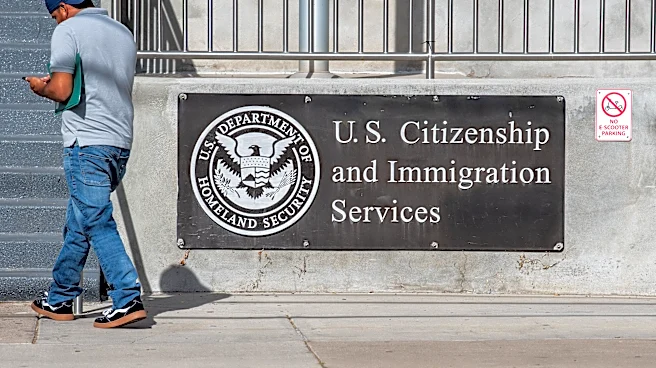
as First Vice President, Michelle L. Saenz-Rodriguez as Second Vice President, David Wilks as Treasurer, and Andres Lopez as Secretary. Ms. Axelrad, a partner with Barst & Mukamal LLP, focuses on corporate and family-based immigration, with significant interaction with various Department of Homeland Security (DHS) offices, including U.S. Citizenship and Immigration Services (USCIS), Department of State, and Customs and Border Protection (CBP). Ms. Watson's expertise includes citizenship and naturalization, family-based immigration, and federal court litigation. Mr. Wilks, co-leading the Immigration Practice Group at Hodgson Russ, has extensive experience with cross-border transfers into the U.S. and assisting individuals in obtaining U.S. citizenship. Mr. Lopez, owner of Lopez Law Firm, PLLC, practices in all areas of U.S. Immigration and Nationality Law, including removal defense and various benefits.
Why It's Important?
The announcement of AILA's 2027 national officers is significant for the U.S. immigration landscape. AILA plays a crucial role in advocating for fair and efficient immigration policies and practices. The incoming leadership, with their diverse expertise in areas such as corporate immigration, family-based immigration, citizenship, naturalization, and removal defense, will influence the discourse and legal strategies surrounding immigration in the United States. Their emphasis on interaction with USCIS and other government agencies underscores the ongoing complexities and challenges within the U.S. immigration system. The collective experience of these officers, particularly in navigating the intricacies of U.S. Citizenship and Immigration Services (USCIS) processes, will be vital in representing the interests of immigrants and their families, as well as businesses seeking to transfer employees to the U.S. Their work will directly impact how immigration laws are interpreted and applied, potentially shaping future policy discussions and legal precedents.
What's Next?
The newly announced AILA officers will assume their roles in 2027, at which point they are expected to lead the organization's efforts in advocating for immigration reform and providing legal guidance. Their collective experience suggests a continued focus on navigating the complexities of U.S. Citizenship and Immigration Services (USCIS) procedures, addressing family-based immigration challenges, and handling corporate immigration matters. Given their backgrounds, it is likely they will engage with government bodies, including DHS, USCIS, and CBP, to influence policy and improve the efficiency of immigration processes. The officers will also continue to provide resources and support to immigration lawyers across the country, potentially through conferences, publications, and liaison activities with government agencies. Their leadership will be instrumental in responding to evolving immigration policies and legal challenges in the coming years.
Beyond the Headlines
The selection of AILA's 2027 national officers reflects the multifaceted nature of U.S. immigration law and its profound societal impact. The emphasis on interaction with U.S. Citizenship and Immigration Services (USCIS) highlights the critical role this agency plays in the lives of countless individuals and families. The officers' diverse specializations, from corporate transfers to family-based petitions and removal defense, underscore the broad spectrum of legal and human issues at stake. This leadership team will not only address legal technicalities but also grapple with the ethical and humanitarian dimensions of immigration, influencing how the U.S. balances national interests with individual rights and family unity. Their work will contribute to the ongoing national conversation about identity, belonging, and the future of American society, reflecting deeper cultural and political currents surrounding immigration.