





What's Happening?
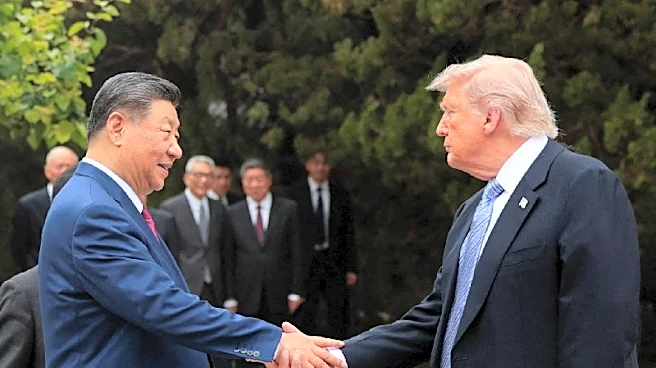
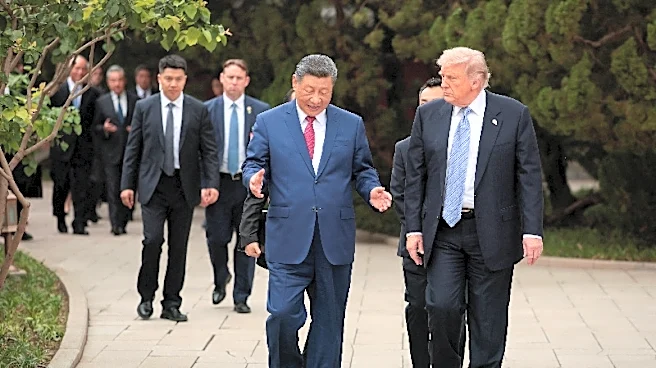
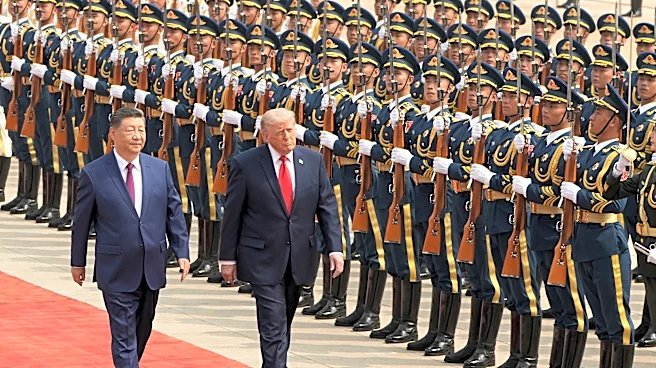
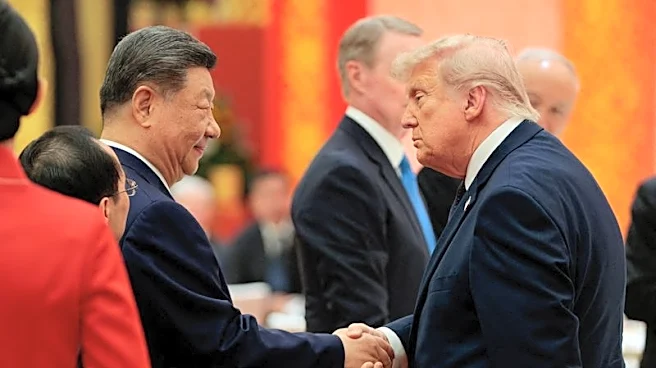
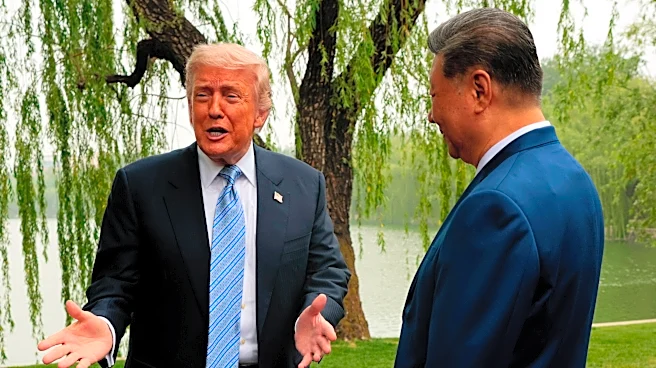
President Trump has successfully negotiated a series of historic trade agreements with China, aimed at enhancing economic relations between the two nations. The agreements include the establishment of the U.S.-China Board of Trade and the U.S.-China Board of Investment,
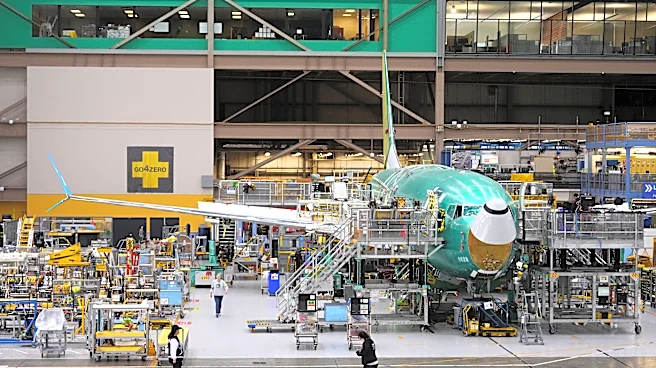
which are designed to manage bilateral trade and investment issues. These boards will facilitate discussions on non-sensitive goods and investment-related matters, respectively. As part of the deal, China has committed to purchasing 200 American-made Boeing aircraft, marking the first such purchase since 2017. This move is expected to create high-paying manufacturing jobs in the U.S. Additionally, China has agreed to address U.S. concerns regarding supply chain shortages of critical minerals and restrictions on rare earth production technologies.
Why It's Important?
The agreements represent a significant step in improving U.S.-China economic relations, potentially leading to increased stability and confidence for businesses and consumers globally. By securing these deals, President Trump aims to boost the U.S. economy by creating jobs and opening new markets for American goods. The purchase of Boeing aircraft alone is expected to support high-skilled manufacturing jobs in the U.S. Furthermore, addressing supply chain issues related to critical minerals could enhance the U.S.'s strategic resource security. These developments could also influence global trade dynamics, as the U.S. and China are major economic players.
What's Next?
The establishment of the U.S.-China Boards of Trade and Investment will likely lead to ongoing negotiations and discussions between the two countries. These forums are expected to address various trade and investment issues, potentially leading to further agreements. The upcoming visit of President Xi to Washington and the hosting of the G20 and APEC Summits by both countries could provide additional opportunities for dialogue and collaboration. Stakeholders in the U.S. manufacturing and agricultural sectors will be closely monitoring the implementation of these agreements and their impact on trade and job creation.
Beyond the Headlines
The agreements could have broader implications for international relations and geopolitical stability. By strengthening economic ties, the U.S. and China may also enhance their strategic stability, which could influence global peace and security. The commitment to denuclearize North Korea and reopen the Strait of Hormuz highlights the potential for these economic agreements to contribute to broader diplomatic efforts. Additionally, the focus on fair and reciprocal trade practices may set a precedent for future international trade negotiations.