


What's Happening?
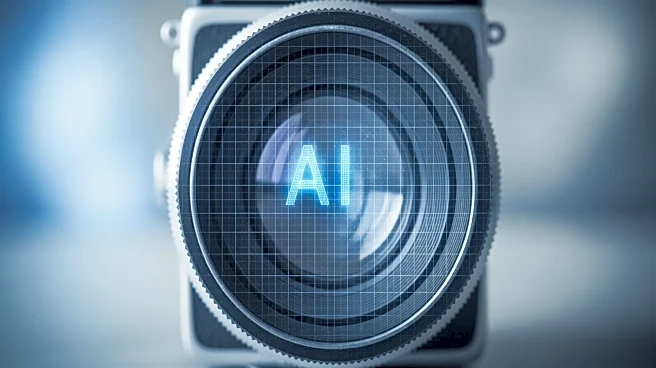
The advent of artificial intelligence (AI) has fundamentally altered the perception of photographs as reliable evidence. Historically, photographs were seen as a certificate of reality, providing a shared visual vocabulary that anchored collective understanding.
However, AI has introduced a new era of historical surrealism, where images are infinitely pliable and can be manipulated to create invented histories. This shift is facilitated by AI systems that allow for easy rewriting of history, combined with social media platforms that rapidly disseminate these altered images. The result is a cultural landscape where truth is no longer universally fixed but is negotiated within individual silos, leading to an epistemic collapse.
Why It's Important?
The implications of AI's impact on photography are profound, affecting how information is consumed and trusted. As images become less reliable, the traditional framework of truth verification through photographs is challenged, necessitating new methods of discernment and trust-building. This shift could influence public policy, media integrity, and societal trust, as visual evidence becomes less credible. Stakeholders such as media organizations, policymakers, and educators must adapt to this new reality, emphasizing critical thinking and media literacy to navigate the complexities of AI-generated content.
What's Next?
The future may involve a return to pre-photographic methods of truth exchange, relying on oral traditions and local verification. As AI continues to evolve, there will be a need to establish new frameworks for trust that prioritize human discernment and empathy over mechanical verification. This transition could lead to innovative approaches in media and communication, reshaping how society interacts with information and perceives reality.
Beyond the Headlines
The ethical dimensions of AI in photography raise questions about the nature of truth and the role of technology in shaping perception. As AI-generated images blur the lines between reality and fiction, there is a risk of increased misinformation and conspiracy theories. This development challenges the ethical responsibilities of creators and distributors of AI content, prompting discussions on regulation and accountability in digital media.